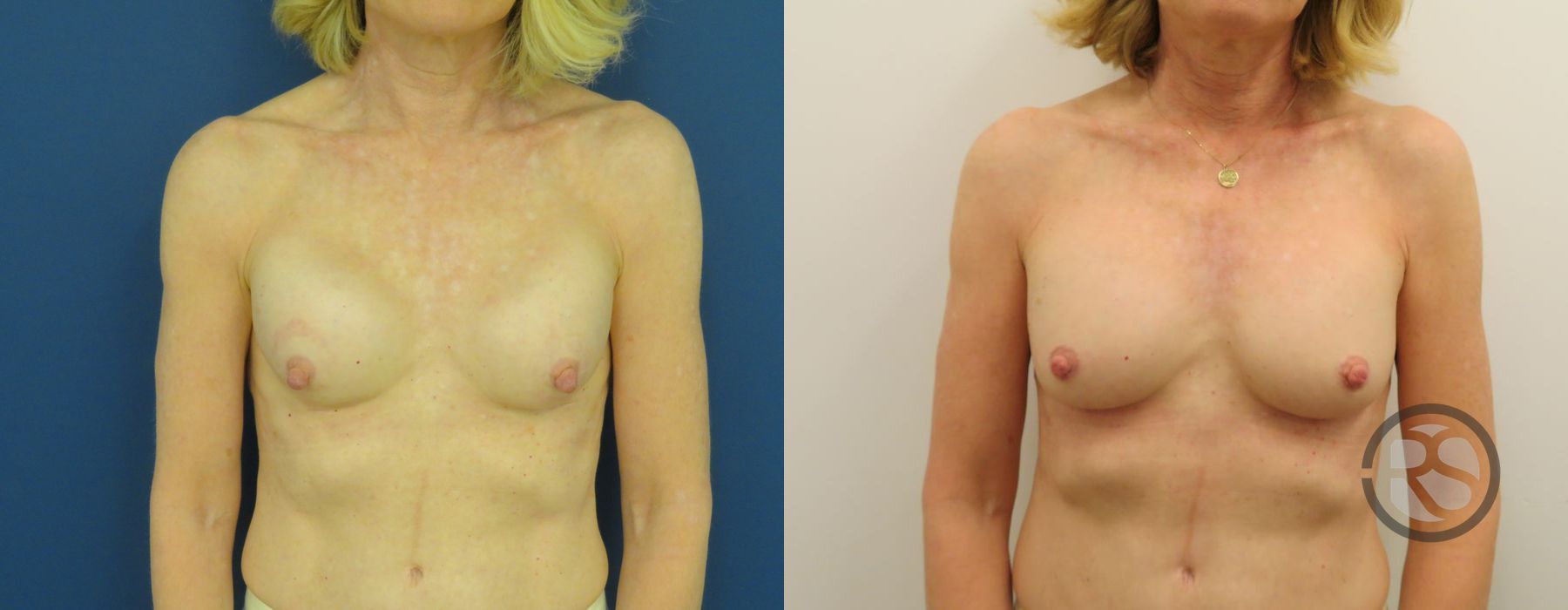
Case #19712
Nipple Correction.
Nipple correction refers to a group of surgical techniques used to address differences in nipple position, projection, size, or shape.
These concerns may be present from birth, develop over time, or occur after life events such as pregnancy, breastfeeding, weight change, trauma, or prior breast surgery.
While nipple concerns are often discussed in cosmetic contexts, they can also have functional, psychological, and reconstructive significance. For some patients, nipple anatomy affects comfort, hygiene, breastfeeding, or body image. This page is designed to provide clear, medically grounded information so patients can understand what nipple correction involves, who it may help, and how it fits into broader breast care planning.
Why Choose Dr. Sadowski?
Care involving the nipple–areolar complex requires particular attention to anatomy, vascular supply, sensation, and long-term tissue health. Rita Sadowski, MD approaches nipple correction from a reconstructive and functional perspective, not simply an aesthetic one.
Her practice philosophy emphasizes:
- Careful anatomical assessment and conservative surgical planning
- Preservation of blood supply, sensation, and structural integrity whenever possible
- Thoughtful discussion of trade-offs, limitations, and alternatives
- Integration of nipple correction into overall breast health and reconstructive goals
This approach is especially important for patients who have had prior breast surgery, plan future breastfeeding, or are combining nipple correction with other breast procedures.
Nipple Correction before & after gallery
What Is Nipple Correction?
Nipple correction is a surgical intervention designed to modify nipple anatomy when it differs from a patient’s goals or causes functional or emotional concerns. The most common indication is inverted nipples, but nipple correction may also address:
- Excessive nipple projection
- Asymmetry between nipples
- Changes following breast surgery or trauma
- Congenital differences in nipple development
The specific technique used depends on the underlying anatomy, degree of correction required, and whether preservation of milk ducts or sensation is a priority.
Are There Different Kinds of Nipple Correction and What Are They?
Yes. Nipple correction is not a single procedure but a category of treatments tailored to the underlying issue.
Common types include:
- Inverted nipple correction: Releases tethering tissue that pulls the nipple inward
- Nipple reduction: Reduces excessive projection or width
- Nipple repositioning: Adjusts nipple placement, often in conjunction with breast lift or reconstruction
- Reconstructive nipple correction: Addresses changes after mastectomy, lumpectomy, or trauma
Each approach has different implications for sensation, breastfeeding potential, scarring, and durability of results.
Male Nipple Correction
Men may seek nipple correction for both functional and aesthetic reasons. Common concerns include inverted nipples, prominent nipples, or nipple asymmetry, sometimes associated with gynecomastia or prior chest surgery.
Male nipple correction is planned with attention to chest contour, skin thickness, and scar placement, often using techniques distinct from those used in female breast surgery.
Am I a Candidate for Nipple Correction?
You may be a candidate if you:
- Have long-standing or acquired nipple inversion
- Experience discomfort, hygiene challenges, or self-consciousness related to nipple anatomy
- Are in good general health
- Have realistic expectations and understand potential limitations
Nipple correction may not be appropriate for individuals with active breast infection, certain connective tissue disorders, or when preservation of breastfeeding capability is a priority and the anatomy does not allow for duct-sparing techniques. These considerations are evaluated carefully during consultation.
What Are the Benefits of Nipple Correction?
Benefits vary based on anatomy, surgical technique, and individual healing response. No outcome can be guaranteed, and results are assessed in the context of overall breast health.
Patient Timeline
While timelines vary, a general framework includes:
Initial consultation and evaluation
Preoperative planning and discussion
Procedure day (often outpatient)
Early healing phase over the first few weeks
Gradual tissue stabilization over several months
Your surgeon will provide individualized guidance based on your specific procedure.
What Is the First Step?
The first step is a comprehensive consultation. This includes:
- Review of medical history and prior breast procedures
- Physical examination of nipple and breast anatomy
- Discussion of goals, concerns, and priorities
- Review of surgical and non-surgical options
This visit is informational and collaborative, allowing time for questions and thoughtful decision-making.
What to Expect on the Day of Surgery?
Nipple correction is commonly performed as an outpatient procedure. Depending on the extent of correction, it may be done under local anesthesia with or without sedation, or in combination with other breast surgeries under general anesthesia.
The procedure typically focuses on precise tissue release or reshaping, with careful attention to blood supply and wound closure.
What Is the Recovery Like?
Recovery is usually straightforward. Most patients experience:
- Mild to moderate soreness or sensitivity
- Temporary swelling or bruising
- Protective dressings over the nipples
Activity restrictions are typically limited, but specific instructions depend on the procedure performed and whether it was combined with other surgeries.
How Long Do the Results Last for Nipple Correction?
Results are generally long-lasting, but durability depends on:
- The degree of correction required
- Tissue characteristics
- Healing response
- Whether underlying forces (such as scar tissue or duct tethering) persist
In some cases, partial recurrence is possible, particularly with severe inversion.
What Other Procedures Can Be Combined With Nipple Correction?
Nipple correction is often performed alongside:
- Breast lift (mastopexy)
- Breast reduction
- Breast augmentation or implant exchange
- Breast reconstruction
Combining procedures may improve overall balance and reduce the need for multiple surgeries, but it also increases complexity and recovery considerations.
What Other Options Are There If I’m Not Ready for Surgery?
Non-surgical options may include:
- External suction devices for mild inversion
- Observation when symptoms are minimal
- Counseling or reassurance when concerns are primarily cosmetic
These approaches may offer limited or temporary improvement and are not appropriate for all anatomical types.