Case #13668
Labiaplasty in Boston.
Labiaplasty is a procedure to alter either the labia majora (outer lips), labia minora (inner lips) or both
Introduction to Labiaplasty
Labiaplasty is a surgical procedure that changes the size, shape, or symmetry of the labia, most often the labia minora, which are the inner folds of tissue surrounding the vaginal opening. You may consider labiaplasty if you have persistent physical discomfort, concerns about asymmetry or appearance, changes following childbirth or aging, or tissue changes related to an injury or previous surgery. Labiaplasty is one option, but it is not appropriate or necessary for everyone.
Labiaplasty changes some of the external vulvar tissue. It does not tighten the vaginal canal and should not be used interchangeably with procedures or terms such as vaginoplasty or “vaginal rejuvenation.”
At New England Reconstructive & Aesthetic Surgery, we approach labiaplasty as a surgical decision that requires careful consideration of your anatomy, symptoms, medical history, goals, lifestyle, and expectations. During a consultation, Dr. Rita Sadowski will discuss what surgery may and may not address, along with potential benefits, limitations, risks, scars, anesthesia options, and recovery. If you are considering labiaplasty, our team in the Chestnut Hill area of Boston would be happy to help you schedule an appointment with Dr. Sadowski.
Labiaplasty before & after gallery
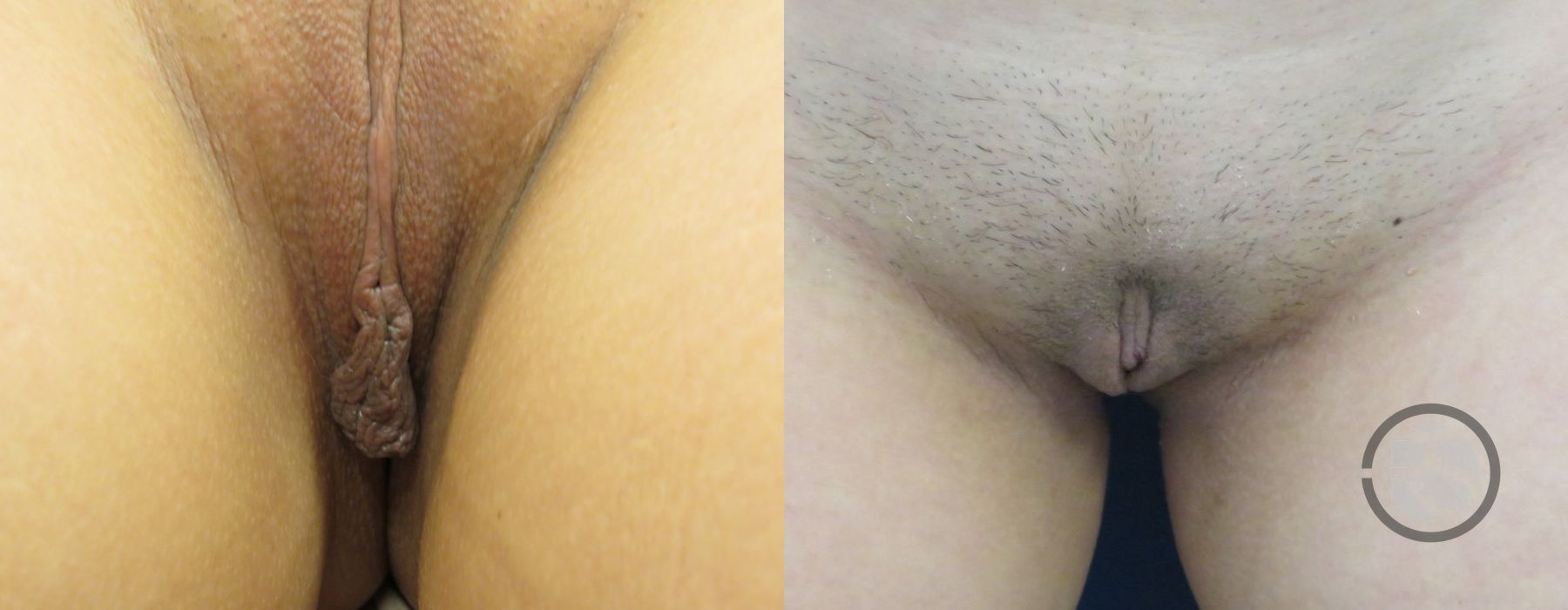
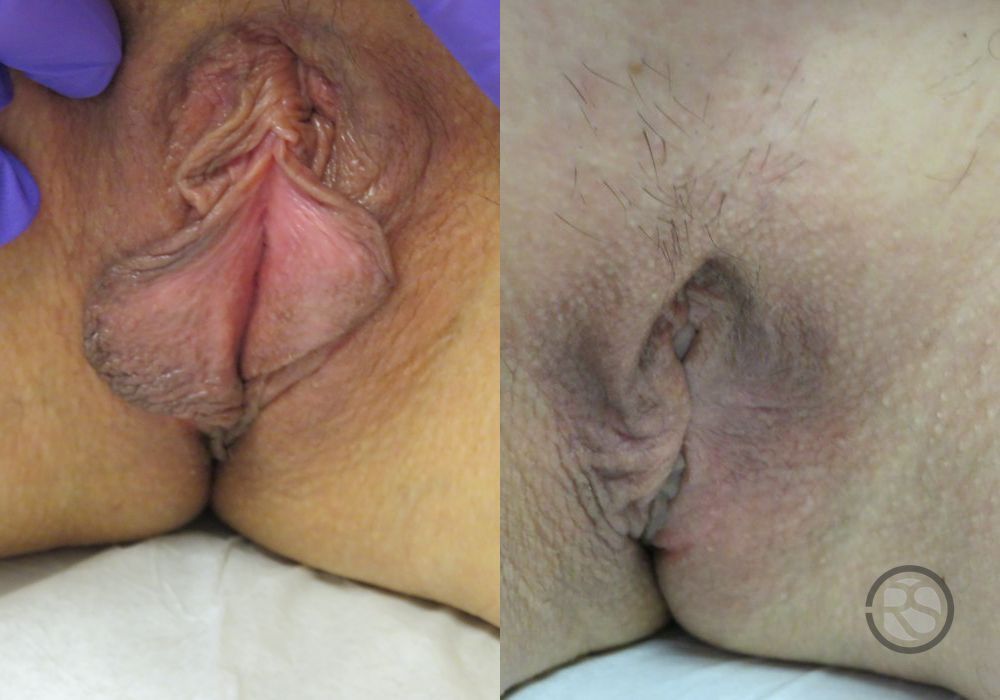
Case #13669
Labiaplasty
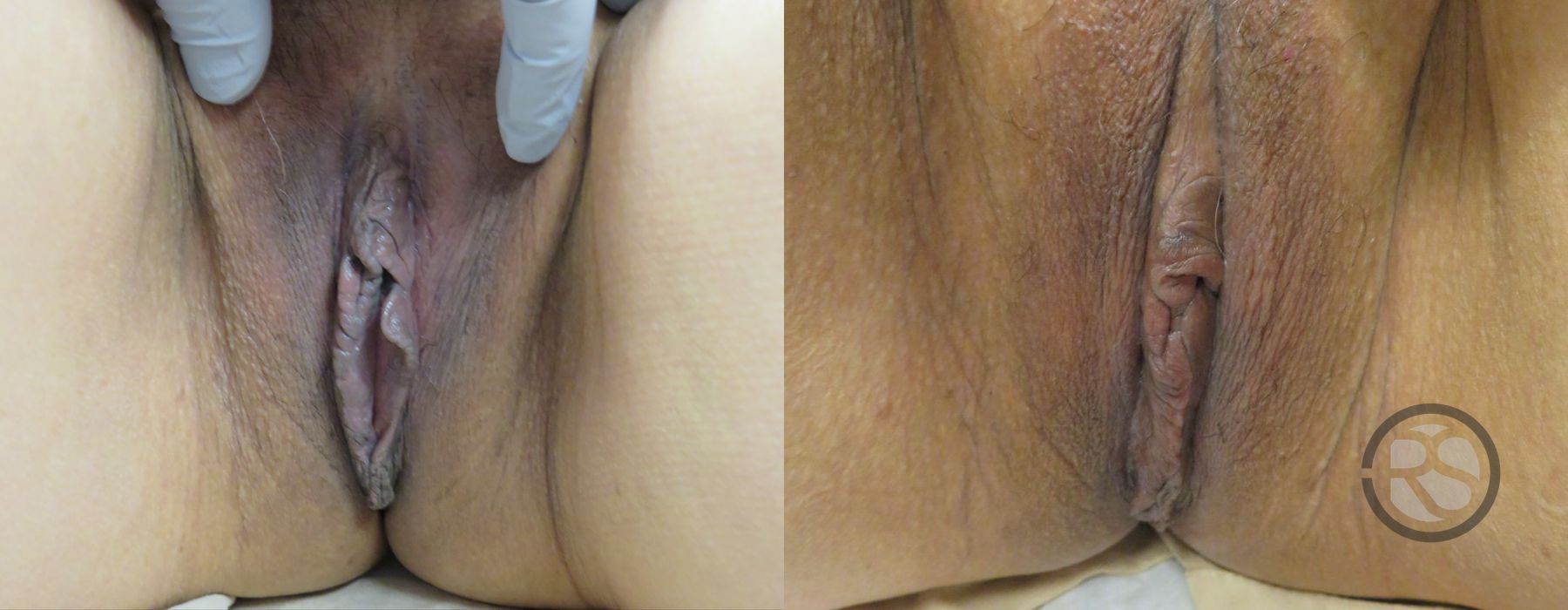
Case #13670
Labiaplasty
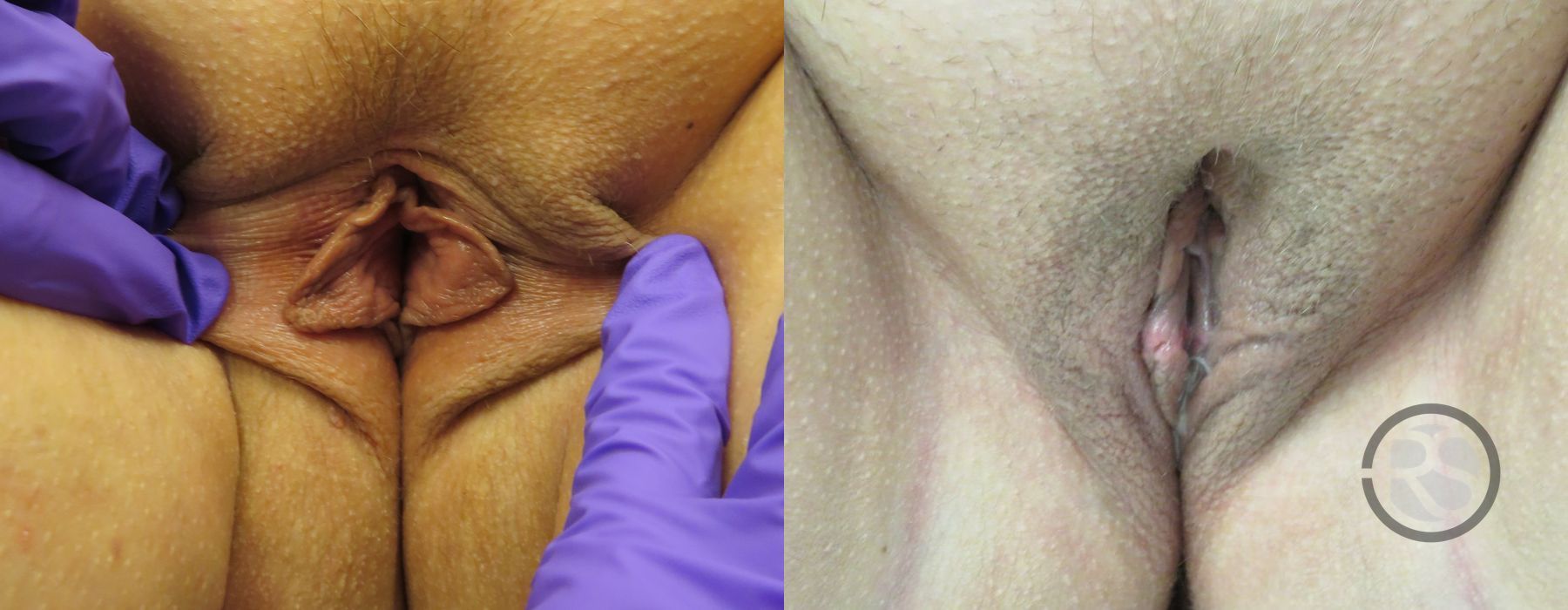
Case #16050
Labiaplasty
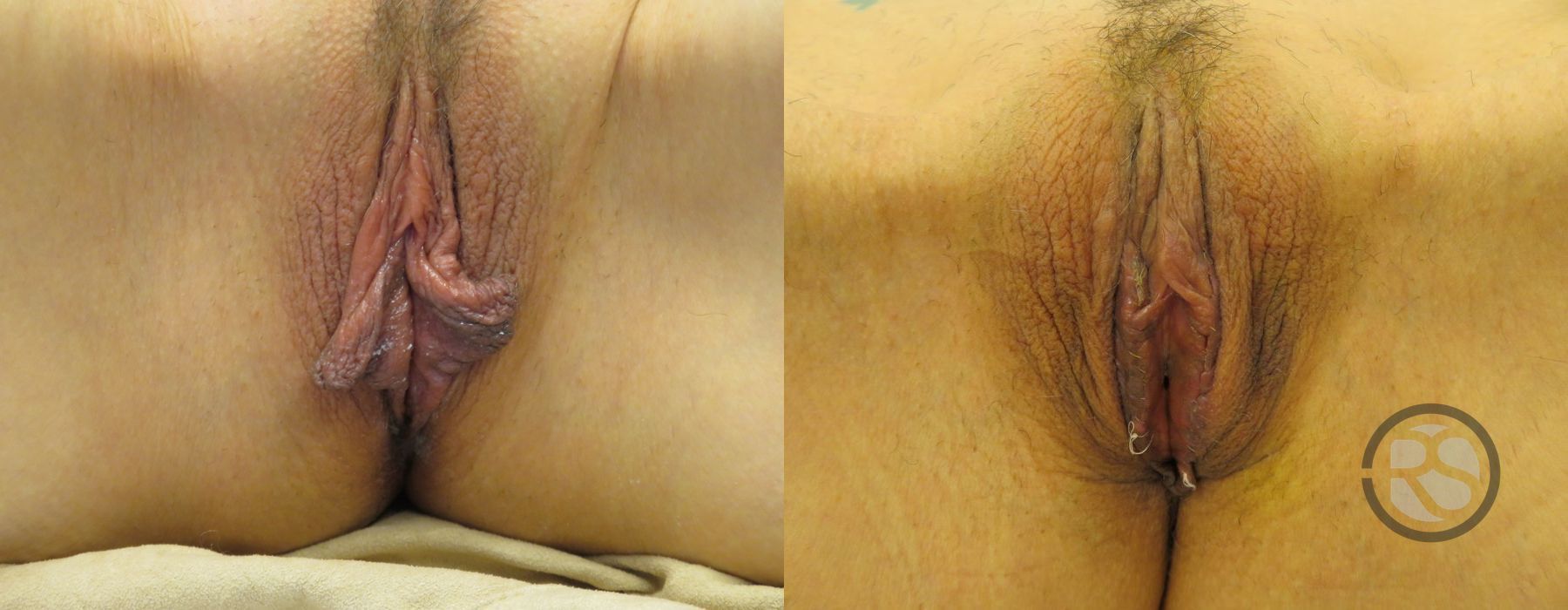
Case #16837
Labiaplasty
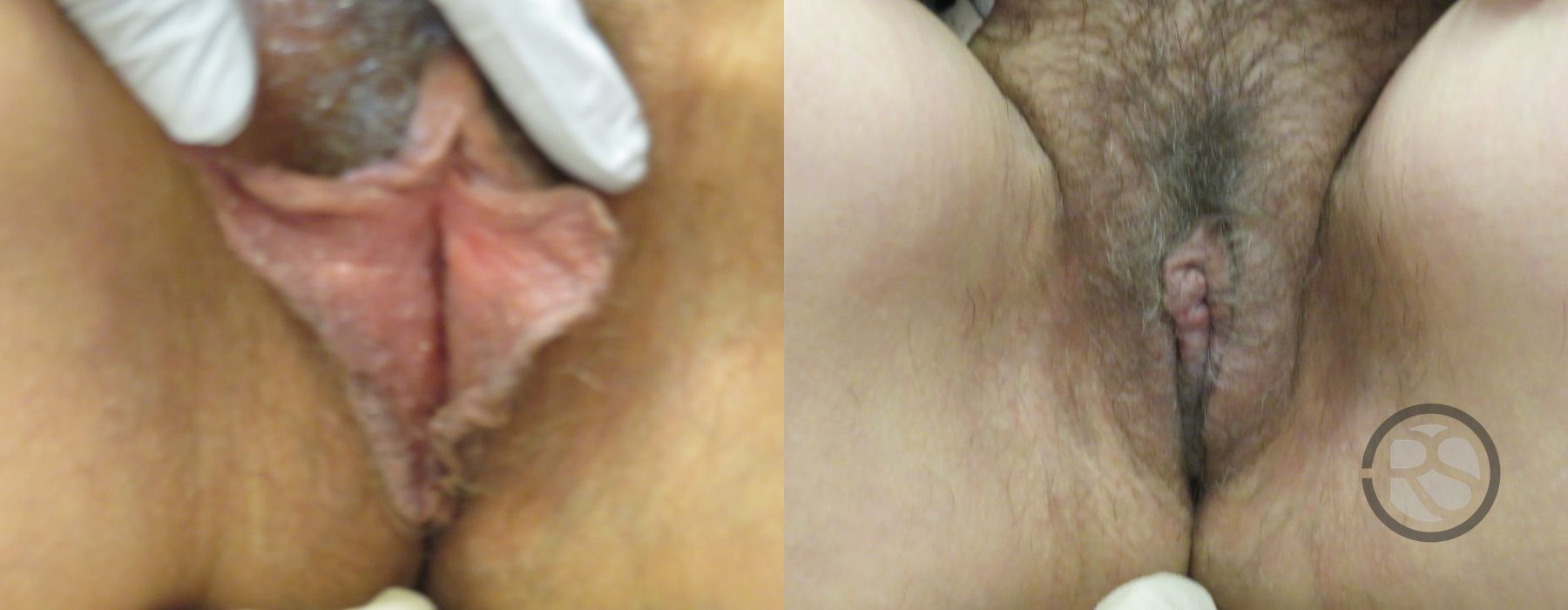
Case #13665
Labiaplasty
What Is Labiaplasty?
Labiaplasty most often refers to reducing or reshaping the labia minora. These are the inner folds of the vulva located inside the labia majora. They help protect the vaginal and urethral openings and contain blood vessels and sensory nerves.
During labiaplasty, Dr. Sadowski removes or reshapes selected tissue while taking into account the remaining tissue, its blood supply, contour, and function. The incisions are generally closed with absorbable sutures.
Labiaplasty may be performed on one side when the primary concern is asymmetry, or on both sides with different amounts of tissue removed from each side. The surgical plan depends on your anatomy rather than a predetermined amount of tissue to be removed.
Are There Different Kinds of Labiaplasty and What Are They?
There is no single labiaplasty technique that is appropriate for every patient. Our facility in the Chestnut Hill area of Boston provides a range of techniques, based upon your own anatomy and desired outcome. Dr. Sadowski will consider the amount and location of tissue, the natural contour and pigmentation of the labial edge, asymmetry, tissue quality, blood supply, previous surgery, and your goals to create a tailored plan for you.
Trim or Edge-Excision Labiaplasty
In a trim labiaplasty, tissue is removed along the outer edge of the labia minora. The remaining edge is then closed with absorbable sutures. This approach changes the length and contour of the outer labial border.
Wedge Labiaplasty
A wedge labiaplasty removes a V-shaped or similarly designed segment from the thickest or most prominent portion of the labium. The remaining tissue is brought together while preserving much of the natural outer edge.
A wedge technique may be considered when preservation of the existing color and contour of the labial border is an important part of the surgical plan, or when the vertical length is only increased in a very discrete section.
Asymmetric or Unilateral Labiaplasty
It is common for one side of the labia to be larger, longer, or shaped differently from the other. In these cases, surgery may be performed on only one side, or different amounts of tissue may be removed from each side.
Complete symmetry is not a realistic surgical goal because some asymmetry is part of normal anatomy. In addition, each side may swell and heal differently during recovery.
Clitoral Hood Reduction
A clitoral hood reduction removes selected folds of skin adjacent to or above the clitoris. It may be considered alongside labiaplasty when excess hood tissue would otherwise appear disproportionate to the changes made to the labia minora.
Clitoral hood reduction is not a routine part of every labiaplasty. The decision depends on your anatomy and whether changing this tissue is appropriate for your goals.
Why Choose Dr. Sadowski?
Dr. Sadowski begins by understanding why you are considering surgery rather than assuming that a particular procedure or technique is appropriate. She will evaluate your anatomy, discuss the normal range of vulvar variation, and consider whether your concerns are related to the labial tissue itself or another issue that may require a different approach.
Dr. Sadowski is a double-board-certified plastic surgeon and a member of the American Society of Plastic Surgeons. She has also been recognized as a Boston Magazine Top Doctor for eight consecutive years, from 2019 through 2026.
Dr. Sadowski specializes in awake labiaplasty. When appropriate, anesthesia can be provided using a combination of medications intended to keep you comfortable during surgery without the use of general anesthesia. You may listen to music, use headphones, or interact with the surgical team during the procedure. Avoiding general anesthesia may also avoid some of its associated effects, such as nausea or prolonged grogginess. Whether awake labiaplasty is appropriate depends on your health, the extent of surgery, your preferences, and the overall surgical plan.
Am I a Candidate for Labiaplasty?
Our facility in the Chestnut Hill area of Boston provides labiaplasty services for adults who:
- Experience persistent pulling, twisting, chafing, irritation, or discomfort associated with the labial tissue
- Have difficulty wearing clothing because excess labial tissue escapes over the side of normal bathing suits or panties.
- Experience discomfort during exercise, cycling, sexual activity, or while wearing certain clothing
- Have difficulty using menstrual products comfortably because of the position or movement of the tissue
- Have asymmetry, tissue changes, or scarring following childbirth, trauma, or previous surgery
- Have an aesthetic concern that remains important after learning about the broad range of normal vulvar anatomy
Pregnancy and childbirth can alter vulvar tissue. If you are planning a pregnancy in the near future, you may decide to postpone surgery. Prior labiaplasty does not prevent pregnancy or necessarily prevent vaginal delivery, although pregnancy and childbirth may change the tissues again.
Having labia that are prominent, asymmetric, or visible beyond the labia majora does not, by itself, mean that surgery is medically necessary. During your consultation, Dr. Sadowski will consider your symptoms, anatomy, health, and reasons for seeking treatment before determining whether surgery is appropriate.
What Other Procedures Can Be Combined With a Labiaplasty?
Labiaplasty may be performed by itself or, when medically appropriate, combined with another procedure. Depending on your anatomy, goals, health, and overall surgical plan, possible procedures may include:
- Clitoral hood reduction
- Labia majora reduction
- Labia majora fat grafting or volume restoration
- Mons pubis reduction or monsplasty
- Liposuction
- Tummy tuck surgery, or abdominoplasty
- Breast surgery
- A broader Mommy Makeover treatment plan
Combining procedures can reduce the need for separate operations, but it also changes the overall surgical and recovery considerations. Longer operative time, anesthesia, positioning, activity restrictions, and recovery demands all need to be considered. Dr. Sadowski will discuss whether combining procedures is reasonable based on your health, priorities, and ability to accommodate the recovery.
What Other Options Are There if I’m Not Ready for Surgery?
There is no nonsurgical treatment that can reliably shorten or remove excess labia minora tissue. However, surgery is not required simply because the labia are visible, asymmetric, or extend beyond the labia majora. It is also important to determine whether discomfort in the vulvar or perineal area is actually related to the size of the labia. Hormonal changes during perimenopause and menopause can affect vulvar and vaginal tissues and may contribute to discomfort. When hormone loss is contributing to symptoms, hormone replacement may be an appropriate option to discuss. Dr. Sadowski can help determine whether your symptoms are likely to benefit from labiaplasty or whether another approach should be considered.
Schedule a Labiaplasty Consultation in Boston
If you are considering labiaplasty in Boston, a consultation with Dr. Sadowski can help you understand whether surgery addresses your concerns and what alternatives may be available. Dr. Sadowski will evaluate your anatomy, medical history, symptoms, goals, and recovery considerations before discussing whether labiaplasty is appropriate for you. Contact our office to schedule a private consultation and discuss your options.
What Is the First Step?
The first step to your labiaplasty is a private consultation with Dr. Sadowski. You should be prepared to discuss what concerns you, how long the concern has been present, whether you experience physical symptoms, and what you hope surgery might change.
The consultation is also an opportunity to discuss alternatives. Not every concern involving the vulvar or perineal area is caused by excess labial tissue, and treatment may be different when symptoms are related to hormonal changes, skin conditions, scarring, or another medical issue.
What to Expect on the Day of Surgery
Before surgery, Dr. Sadowski will review the operative plan and mark the tissue while you are awake. This allows the markings to reflect your anatomy and the plan established during your consultation.
Labiaplasty may be performed using local anesthesia, with oral sedation, or with general anesthesia. If you and Dr. Sadowski determine that awake labiaplasty is appropriate for you, you may listen to music, use headphones, listen to an audiobook, or otherwise choose what makes you most comfortable during the procedure.
During surgery, Dr. Sadowski will remove or reshape the planned tissue while considering the labial contour, blood supply, and amount of functional tissue that should remain. The incisions are generally closed with absorbable sutures.
Labiaplasty for patients in and around Boston and Chestnut Hill is usually performed on an outpatient basis. Before you leave, you will receive instructions regarding medications, incision care, hygiene, positioning, activity, and symptoms that should prompt you to contact the office.
What Is the Timeline for Healing From a Labiaplasty?
The following timeline provides a general overview of the labiaplasty process. Your appointments and recovery may differ based on your health, anatomy, surgical technique, whether another procedure is performed at the same time, and how your body heals.
First Several Days
Swelling, bruising, tenderness, and a feeling of tightness are expected. Activity is limited, and careful hygiene and incision care are important. Elevation, cooling packs, and peri-pads may make the first several postoperative days more comfortable. Walking is possible from the very first postoperative day.
First Week
Visible swelling commonly persists during the first week. Depending on your comfort, swelling, medication use, and type of work, you may be able to return to sedentary activities during this period.
Weeks Two Through Six
Swelling gradually improves and activity can increase in stages. Strenuous exercise, cycling, sexual intercourse, and tampon use remain restricted until Dr. Sadowski determines that healing is adequate.
How Long Do the Results Last for a Labiaplasty?
Tissue removed during labiaplasty does not typically grow back, so changes in tissue volume are generally long-lasting.
That does not mean the vulva will remain unchanged indefinitely. Pregnancy, childbirth, aging, hormonal changes, menopause, weight fluctuations, trauma, and other medical conditions can alter the appearance or comfort of the tissues over time.