Case #13595
Brow Lift.
Introduction to brow lift
A brow lift (also called a forehead lift) is a surgical procedure that repositions the eyebrows and the soft tissues of the forehead to address brow descent and related changes around the upper face. Over time, the eyebrows may sit lower on the forehead, and the skin and soft tissue can contribute to a tired, angry, or “heavy” appearance—sometimes with functional effects such as upper eyelid heaviness or a narrowed visual field.
Dr. Sadowski wants you to know that what some people describe as “excess upper eyelid skin” is not always primarily an eyelid issue. Brow position, forehead muscle activity, and the relationship between the brow and upper eyelid can be major drivers. A brow lift is one tool within an entire toolkit of treatments for the upper face. The right plan depends on anatomy, eye health, and individual goals.
Why Choose Dr. Sadowski?
Brow position affects not only appearance, but also eyelid mechanics and the balance of the upper face. Surgical planning must account for scalp and forehead anatomy, nerve sensation, hairline position, and the interaction between the brow and upper eyelids.
Rita Sadowski, MD approaches brow lift surgery with an emphasis on:
- Anatomy-based diagnosis: distinguishing the amount that brow descent is affecting upper eyelid skin redundancy, establishing the amount of true upper eyelid skin redundancy, and identifying the role of forehead muscle activity to the appearance of a heavy brow.
- Balanced correction: Prioritizing natural brow shape and position rather than simply “higher.” For some patients, not all of the brow requires lifting for a natural appearing correction.
- Attention to function and safety: Considering eyelid closure, ocular surface comfort, and the impact of brow position on eyelid skin.
- Thoughtful incision planning: Choosing techniques that respect the hairline, hair-bearing scalp, and long-term scar camouflage.
- Integration with adjacent procedures: Recognizing when blepharoplasty, skin resurfacing, or non-surgical options may be more appropriate than brow elevation alone.
The emphasis is on careful planning and clear discussion of trade-offs, not a one-size-fits-all approach.
Brow Lift before & after gallery
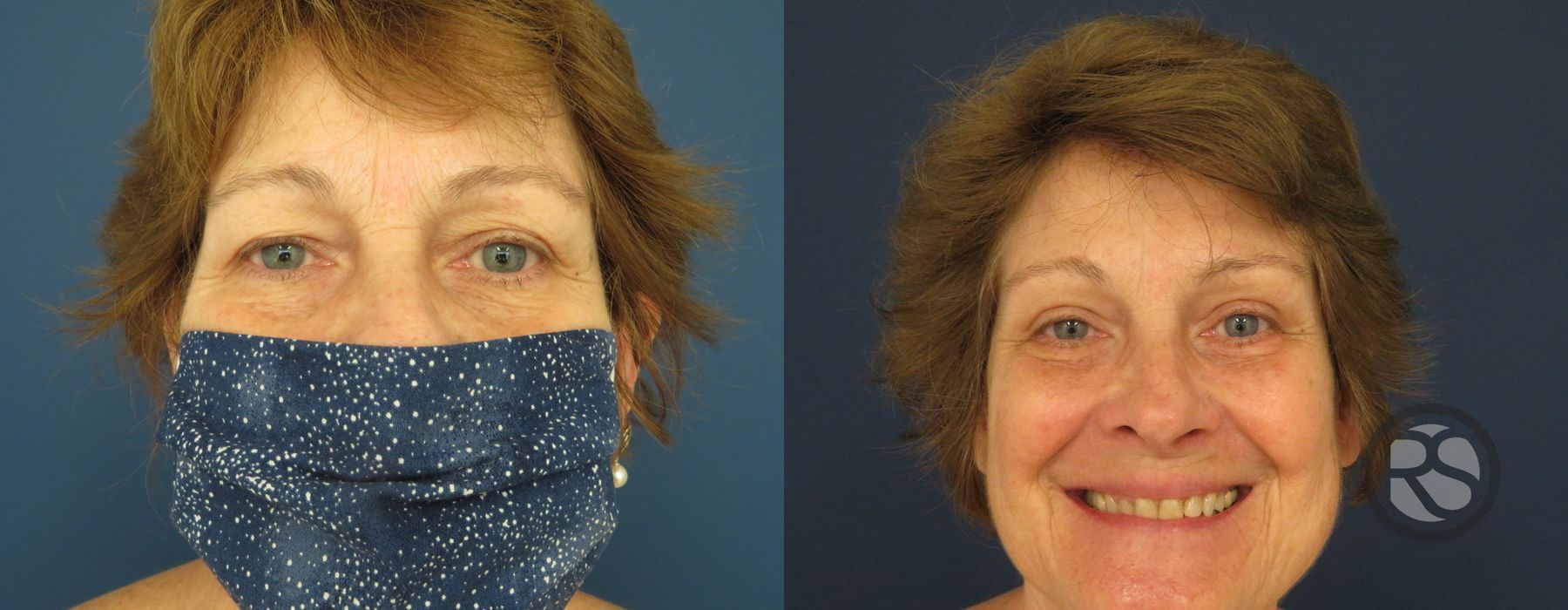
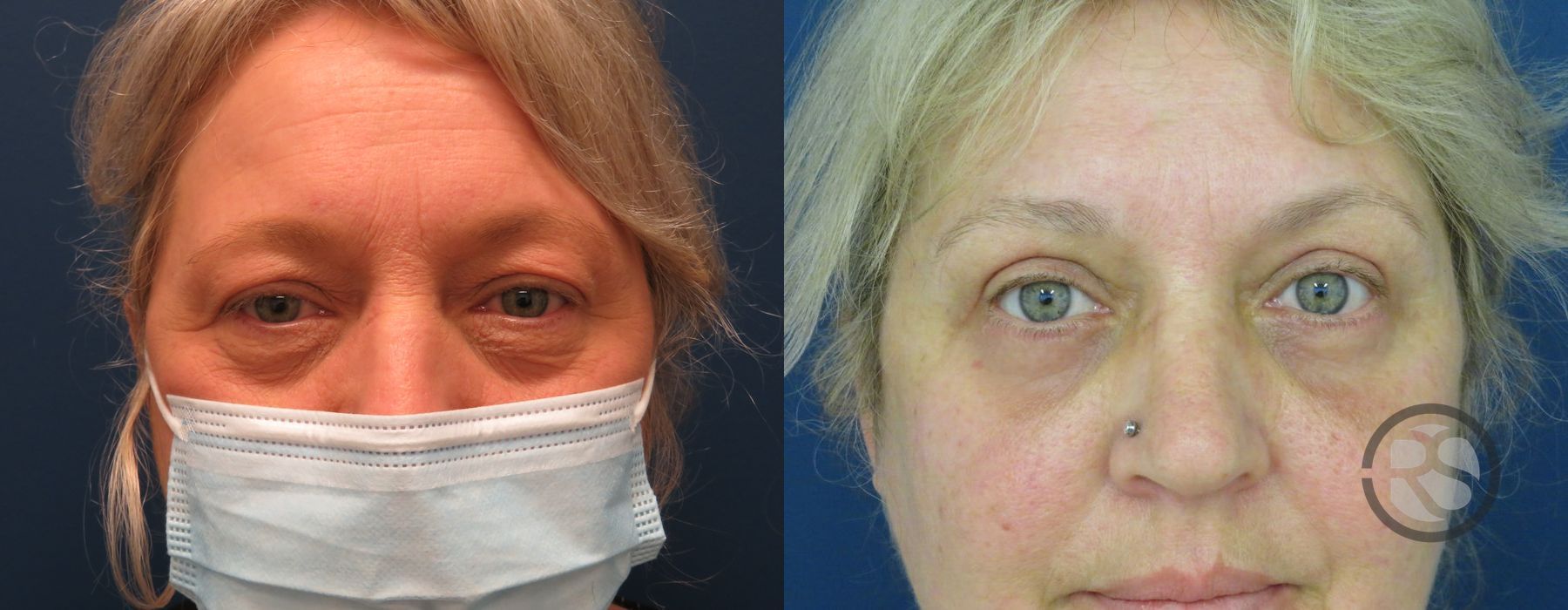
Case #13592
Brow Lift
What Is a Brow Lift?
A brow lift is a procedure that elevates and stabilizes the brow and forehead soft tissues. Depending on technique and anatomy, it can:
- Reposition a descended brow
- Reduce the appearance of heaviness over the upper eyelids (when brow descent is a main contributor)
- Soften deep forehead and glabellar (between-the-brows) creases when they are related to muscle activity and tissue position
A brow lift does not directly treat eyelid fat pockets, eyelid laxity, or under-eye concerns. It also does not “erase” all forehead wrinkles—especially those driven by habitual facial expression—though some patients notice changes in wrinkle pattern when the brow is repositioned and muscle forces are addressed.
Are There Different Kinds of Brow Lifts and What Are They?
Yes. “Brow lift” describes a category of procedures, and technique selection depends on hairline position, degree and pattern of brow descent, skin quality, forehead anatomy, and patient goals.
Common approaches include:
- Endoscopic brow lift
Uses small incisions hidden within the hair-bearing scalp, with a camera-assisted technique to mobilize and elevate the brow tissues. This option may be appropriate when the hairline position is favorable and the anatomy supports an endoscopic approach. - Hairline (pretrichial) brow lift
Places an incision along the hairline to lift the brow while managing forehead length. This technique can be helpful for certain patients where maintaining or improving hairline position is a key planning factor. Scar placement and camouflage are central considerations. - Coronal brow lift
Involves a longer incision within the scalp. It can be useful in selected situations but may carry different trade-offs, such as sensory changes or a longer incision line, depending on anatomy. - Direct brow lift (selected cases)
Places incisions just above the eyebrows to elevate the brow. This can be useful when localized brow elevation is needed (often for functional or reconstructive reasons), but it comes with more visible scar considerations and is not appropriate for every patient. - Temporal or lateral brow lift
Focuses on the outer portion of the brow when lateral descent is the main concern. It may be performed alone or as a component of another procedure.
Your evaluation should include not only “how low the brow is,” but also brow shape, asymmetry, forehead height, hairline, skin thickness, and eyelid position. These details strongly influence which technique is safest and most appropriate.
Male Brow Lift
Men may seek brow lift surgery for heaviness over the eyes, brow asymmetry, or a persistently tired or stern appearance. Planning often differs because:
- The male brow position and shape are typically lower and flatter than in females
- Preserving a natural masculine brow contour is important
- Hairline and scalp considerations (including thinning hair) affect incision selection and scar camouflage
A conservative, anatomy-respecting plan is often essential to avoid an overcorrected appearance.
Am I a Candidate for a Brow Lift?
You may be a candidate if you:
- Notice brow descent that contributes to upper eyelid heaviness or a “hooded” appearance
- Have forehead or between-the-brows creasing related to muscle activity and tissue position
- Are in good general health and do not smoke (or can stop, if advised)
- Have realistic expectations and understand that results vary by anatomy and healing
You may need added evaluation or may not be a good candidate if you have:
- Significant untreated dry eye or eyelid closure issues (important because brow elevation can influence eyelid mechanics)
- Certain neurologic or eyelid position conditions that affect brow/eyelid function
- Medical conditions that raise surgical risk or impair healing
- Goals that are better met with non-surgical options (for example, targeted neuromodulators for muscle-driven creasing)
A careful exam helps determine whether the primary driver is the brow, the eyelid, or both.
What Are the Benefits of a Brow Lift?
Potential benefits may include
Benefits depend on the starting anatomy, technique used, and the body’s healing response. Responsible planning focuses on what is realistically achievable for the individual patient.
Patient Timeline
Recovery varies, but many patients experience a general progression such as:
Consultation and planning
Assessment of brow position, eyelid contribution, hairline considerations, and goals. Photographs are commonly used for planning.
Procedure day
Typically outpatient.
First week
Swelling, bruising, forehead tightness, and mild discomfort are common. Some patients notice temporary numbness or tingling of the scalp/forehead.
Weeks 2–4
Visible swelling and bruising usually improve; many patients feel more comfortable in social settings.
Weeks 6–12
Continued refinement as tissues settle. Sensation changes may gradually improve over time.
Longer-term
Scar maturation and subtle changes in sensation and tightness can continue for several months.
If a brow lift is combined with other procedures, timelines can shift.
What Is the First Step?
The first step is a consultation focused on diagnosis and planning. This typically includes:
- Review of medical history, medications, and prior facial or eyelid procedures
- Assessment of brow position (medial and lateral), asymmetry, forehead height, and hairline
- Evaluation of upper eyelid skin and eyelid position to determine whether blepharoplasty is needed, appropriate, or unnecessary
- Discussion of surgical and non-surgical options, including their limitations and trade-offs
The goal is to clarify what is driving your concern and which approach best matches your anatomy.
What to Expect on the Day of Surgery?
Brow lift surgery is commonly performed as an outpatient procedure. Depending on the technique and whether it is combined with other procedures, it may be done under local anesthesia with sedation or under general anesthesia.
On the day of surgery, patients can generally expect:
- Preoperative marking and review of the surgical plan
- Incisions placed according to the chosen approach (within the scalp, at the hairline, or near the brow in selected cases)
- A method of tissue elevation and stabilization selected for your anatomy
- Postoperative instructions focused on swelling control, incision care, and activity restrictions
What Is the Recovery Like?
Recovery experiences vary by technique and by individual healing patterns. Common early recovery features include:
- Swelling and bruising (often most noticeable in the forehead and around the eyes)
- Tightness or pressure sensation in the forehead or scalp
- Temporary numbness, tingling, or altered sensation of the scalp/forehead
- Headache-like discomfort in the early days for some patients
Patients are typically advised to:
- Keep the head elevated and follow swelling-reduction instructions
- Avoid strenuous activity and heavy lifting initially
- Protect incisions and follow wound care guidance closely
Your surgeon will outline what is expected versus what should prompt a call, such as severe pain, sudden swelling, changes in vision, or signs of infection.
How Long Do the Results Last for a Brow Lift?
Brow lift results are generally long-lasting, but they are not permanent in the sense that they stop aging. Over time, skin and soft tissues continue to change due to:
- Genetics and skin elasticity
- Facial expression patterns
- Sun exposure and environmental factors
- Weight change and overall tissue quality
The intent is to reposition and stabilize tissues in a way that remains natural as aging continues.
What Other Procedures Can Be Combined With a Brow Lift?
Brow lift surgery is sometimes combined with procedures that address adjacent anatomy and contribute to the overall upper-face result, such as:
- Upper blepharoplasty (when true excess upper eyelid skin is present in addition to brow descent)
- Lower blepharoplasty (for under-eye concerns, when appropriate)
- Facelift or midface lift (selected cases, depending on facial structure and goals)
- Skin resurfacing treatments (for skin texture and fine lines, when appropriate)
Combination planning should be individualized and based on anatomy rather than a predefined “package.”
What Other Options Are There If I’m Not Ready for Surgery?
Non-surgical options may help in selected cases, especially when concerns are primarily muscle-driven or mild. Depending on anatomy, options may include:
- Neuromodulators to reduce frown lines and, in selected patterns, modestly influence brow position
- Soft tissue fillers in targeted areas to improve support (not a substitute for surgical repositioning)
- Skin-focused treatments (laser, chemical peels, energy-based devices) to improve texture and fine lines
- Observation when the concern is mild or when timing is not right for surgery
Non-surgical approaches have limitations: they cannot reliably reposition descended tissues to the same degree as surgery and may not address structural brow descent.