Case #19707
Blepharoplasty.
Introduction to blepharoplasty
Blepharoplasty (eyelid surgery) is a procedure that reshapes the upper eyelids, lower eyelids, or both. It can address concerns such as upper eyelid heaviness, drooping skin that folds over the lash line, or under-eye “bags” caused by fat prominence and tissue laxity. In some patients, upper eyelid drooping may also contribute to a blocked or narrowed field of vision.
Because the eyelids are thin, delicate structures that protect the eye, planning for eyelid surgery is both aesthetic and functional. Small differences in anatomy—skin thickness, eyelid position, brow position, muscle tone, tear production, and prior eye history—can meaningfully affect surgical decisions. This page explains blepharoplasty in medically accurate terms, including who it may help, how it is tailored, and what patients should understand before considering a consultation.
Why Choose Dr. Sadowski?
Eyelid surgery requires careful judgment about what to remove, what to preserve, and what should be supported rather than reduced. A patient-first approach prioritizes eye safety, natural eyelid function, and long-term tissue health.
Rita Sadowski, MD approaches blepharoplasty with an emphasis on:
- Anatomy-first planning: Evaluating eyelid position, brow contribution, and midface support—not just “extra skin.”
- Conservative tissue management: Avoiding over-resection, which can contribute to dryness, eyelid retraction, or an operated appearance.
- Functional awareness: Considering vision, blinking mechanics, tear film stability, and prior eye conditions (including contact lens use and prior eye surgery).
- Integration with broader facial balance: Distinguishing when eyelid surgery is appropriate versus when brow position, cheek support, or skin quality are primary drivers.
This is not a one-size-fits-all procedure. Technique selection is individualized, and your anatomy and goals guide the plan.
Blepharoplasty before & after gallery


Case #17196
Blepharoplasty

Case #17606
Blepharoplasty
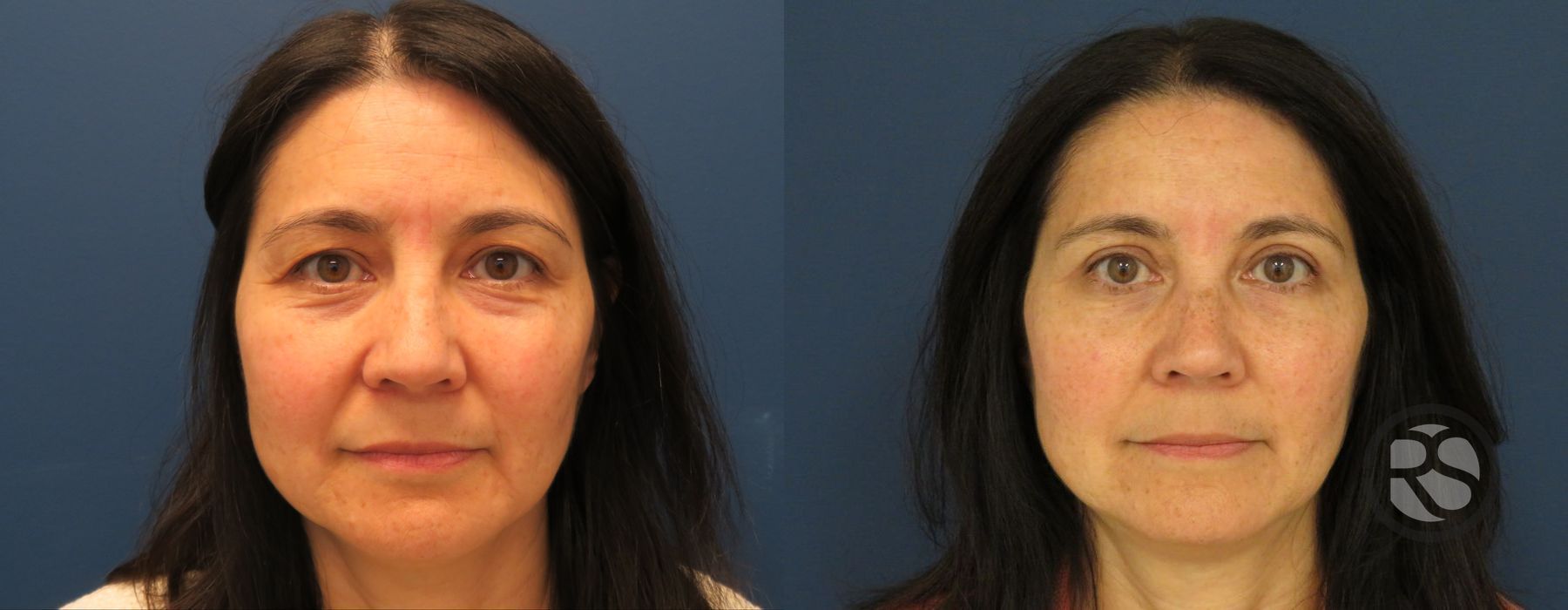
Case #18398
Blepharoplasty
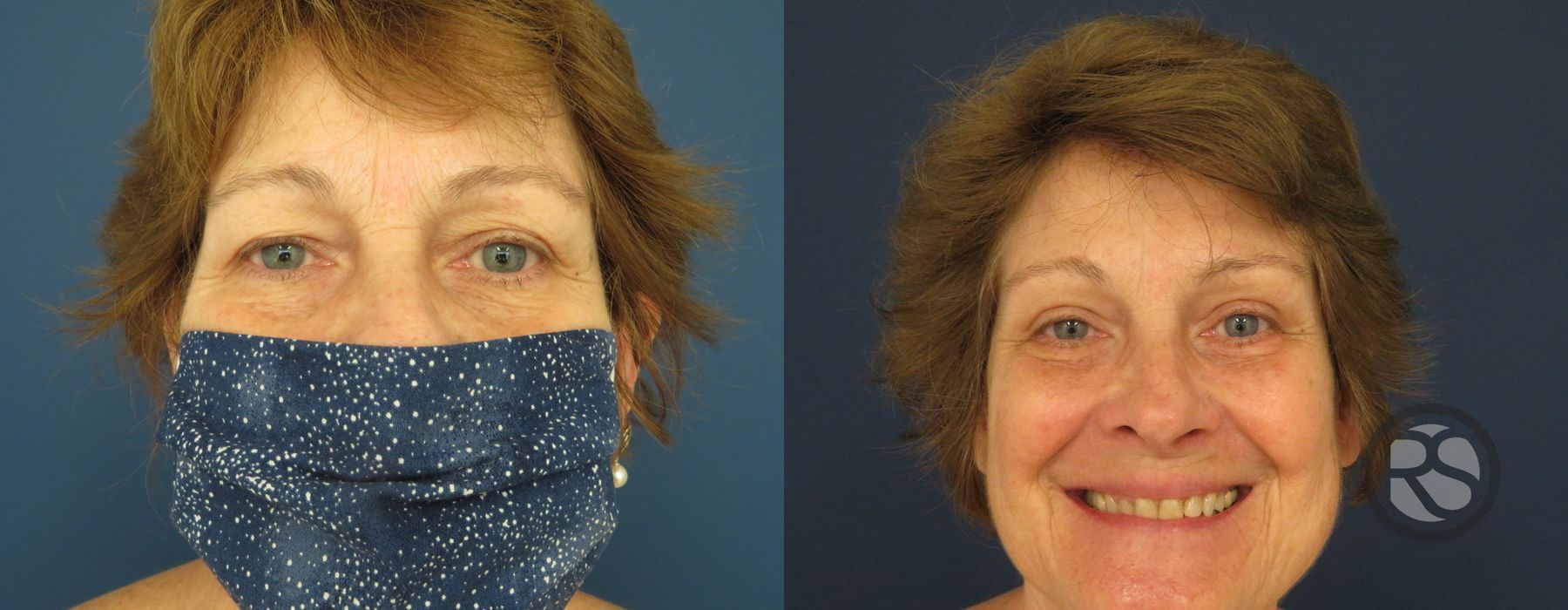
Case #13595
Blepharoplasty
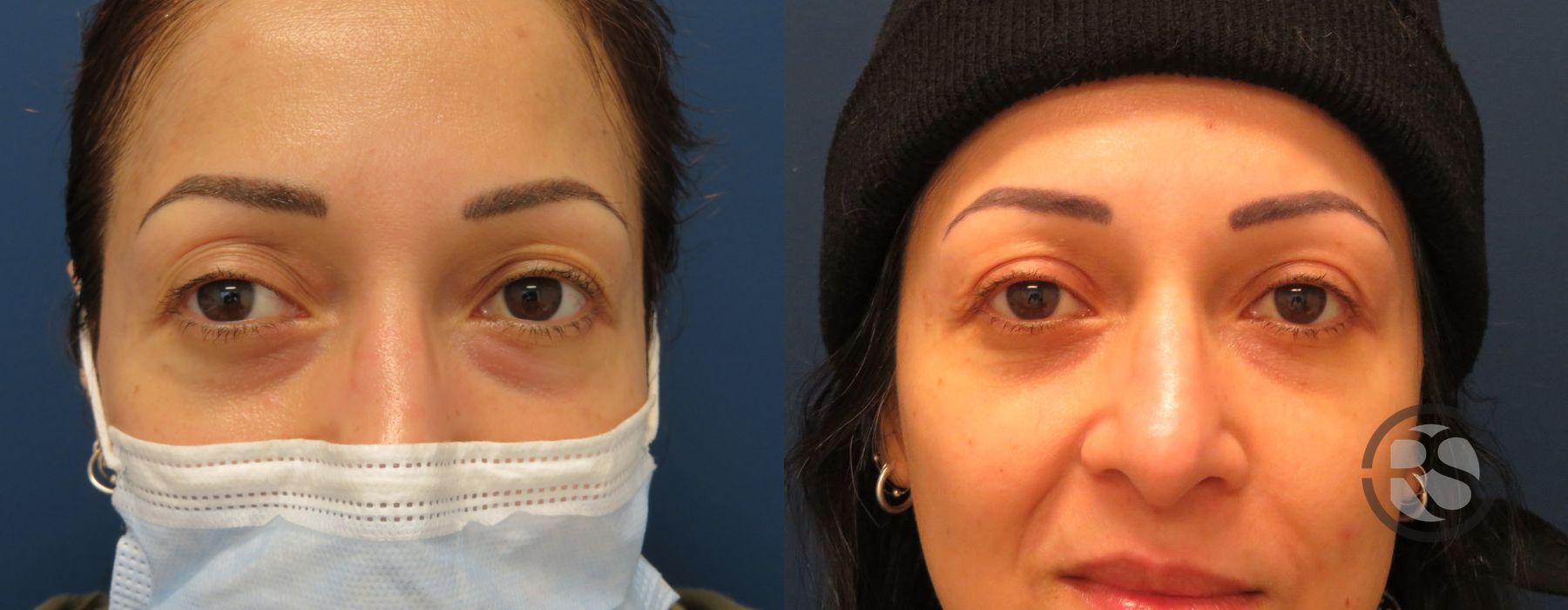
Case #13597
Blepharoplasty
What Is Blepharoplasty?
Blepharoplasty is surgical reshaping of the eyelids to improve eyelid contour and address tissue changes that commonly occur with time. Depending on the area treated, surgery may involve:
- Removing or redistributing excess skin
- Managing fat pockets that can create fullness or “bags”
- Tightening or supporting eyelid structures to maintain position and function
Upper blepharoplasty typically focuses on skin redundancy and upper eyelid contour. Lower blepharoplasty addresses under-eye fullness, skin laxity, and lid support. In many cases, the goal is not simply “less tissue,” but a better relationship between skin, fat, and supporting structures so the eyelids look and function naturally.
Are There Different Kinds of Blepharoplasty and What Are They?
Yes. “Blepharoplasty” is an umbrella term. The procedure is selected based on whether the concern is in the upper lids, lower lids, or both, and whether the primary issue is skin excess, fat prominence, eyelid laxity, or structural support.
Common approaches include:
- Upper blepharoplasty (upper eyelid lift):
Removes a measured amount of excess upper eyelid skin and may address a small amount of fat prominence. The incision is typically placed in the natural upper lid crease. - Lower blepharoplasty (lower eyelid surgery):
Addresses under-eye fullness (fat prominence), skin laxity, and eyelid position. Depending on anatomy, fat may be reduced, repositioned, or preserved. - Transconjunctival lower blepharoplasty:
Performed from the inside of the lower eyelid (no external lower lid incision). Often used when under-eye fullness is the main concern and skin tightening is not the primary need. - Skin–muscle flap lower blepharoplasty (selected cases):
Used when external skin redundancy and muscle laxity are significant. Because lid support is critical, this approach requires careful selection and technique. - Blepharoplasty with lid support procedures (when indicated):
If lower lid laxity is present, supportive techniques (such as canthopexy/canthoplasty) may be considered to maintain a stable, safe lid position.
A key part of evaluation is determining whether the perceived “eyelid problem” is actually driven by brow descent, midface volume changes, or skin quality—which may change the best treatment plan.
Male Blepharoplasty
Eyelid anatomy and aesthetic goals often differ for men. Many male patients want improvement in heaviness or under-eye fullness while maintaining a natural, non-operated appearance and preserving characteristic lid shape.
Male blepharoplasty planning commonly emphasizes:
- Conservative skin removal to avoid an overly high or feminized crease
- Maintaining natural brow–lid relationship and lid fullness where appropriate
- Careful attention to scar placement and healing patterns in thicker skin
Am I a Candidate for Blepharoplasty?
You may be a candidate if you have:
- Upper eyelid skin that feels heavy or folds near the lash line
- Under-eye fullness or “bags” that persist despite rest and skincare
- Eyelid laxity or skin redundancy that affects makeup application or comfort
- Functional concerns such as visual obstruction from excess upper lid skin (in some cases)
You may not be a good candidate—or may need further evaluation—if you have:
- Significant dry eye symptoms, ocular surface disease, or tear film instability
- Uncontrolled medical conditions that increase surgical risk
- Certain eyelid position problems (e.g., significant lid retraction) that require specialized planning
- Untreated thyroid eye disease or other conditions that can affect eyelid position
- A history of complex eye surgery or trauma (not a disqualifier, but important for planning)
A careful history (including contact lens use, prior LASIK/cataract surgery, and dryness symptoms) helps guide safe decision-making.
What Are the Benefits of Blepharoplasty?
Benefits vary by anatomy, and the safest plan may be conservative. A responsible consultation includes discussion of what surgery can and cannot do, and what risks must be weighed for your individual eye health.
Patient Timeline
Individual recovery varies, but many patients can expect a general progression
Consultation and planning
Review of anatomy, goals, medical/eye history, and whether adjunct procedures are appropriate.
Procedure day
Typically outpatient.
First week
Swelling and bruising are common; eyelids can feel tight or dry. Many patients use cold compresses and prescribed ointments/drops as directed.
Weeks 2–4
Bruising generally fades; swelling improves; patients often feel more socially comfortable.
Weeks 6–12
Continued refinement as residual swelling resolves and scars mature.
Longer-term
Scar softening and subtle contour refinement may continue for several months.
If blepharoplasty is combined with other procedures, recovery timelines may change.
What Is the First Step?
The first step is a comprehensive consultation focused on both eyelid appearance and eye safety. This typically includes:
- Review of medical history, medications, and prior facial/eye procedures
- Discussion of dry eye symptoms, vision concerns, contact lens use, and eye history
- Physical exam of eyelid skin redundancy, fat prominence, lid position, and lid laxity
- Assessment of brow position and midface support
- A plan that may include surgical and non-surgical options, including staging when appropriate
What to Expect on the Day of Surgery?
Blepharoplasty is commonly performed as an outpatient procedure. Depending on the plan, it may be done with local anesthesia and sedation or under general anesthesia, particularly if combined with other facial procedures.
On the day of surgery, patients typically can expect:
- Preoperative marking with you upright (important for eyelid planning)
- Protective eye measures and sterile preparation
- A technique selected to preserve lid function and stable eyelid position
- Postoperative instructions focused on swelling control, eye comfort, and activity restrictions
You will receive specific guidance about medications to avoid, eye care, and what symptoms should prompt a call to the office.
What Is the Recovery Like?
Most patients experience swelling and bruising, which are expected and temporary. Common early recovery experiences include:
- Tightness or mild soreness around the eyelids
- Temporary dryness, watering, or light sensitivity
- Mild blurred vision from ointment use (if prescribed)
- Sleep position and activity restrictions to reduce swelling and protect healing tissue
Because eyelids heal quickly but are sensitive, patients are typically advised to avoid strenuous activity, heavy lifting, and situations that increase facial pressure early in recovery. Specific instructions vary depending on whether upper lids, lower lids, or both were treated and whether support procedures were performed.
How Long Do the Results Last for Blepharoplasty?
Blepharoplasty results are typically long-lasting, but the eyelids and surrounding facial tissues continue to age. Longevity is influenced by:
- Skin quality and elasticity
- Genetics and facial structure
- Sun exposure and lifestyle factors
- Whether brow descent or midface changes continue over time
Some patients may benefit from additional procedures years later as anatomy changes, but the goal of careful planning is a natural baseline improvement that ages in a balanced way.
What Other Procedures Can Be Combined With Blepharoplasty?
Blepharoplasty is sometimes combined with procedures that address adjacent anatomy, including:
- Brow lift (when brow descent contributes to upper lid heaviness)
- Facelift or midface lift (in selected cases to improve cheek–lower lid support)
- Skin resurfacing (for skin texture and fine lines, where appropriate)
- Fat grafting (to restore volume loss around the eyes in selected patients)
Combination planning is individualized, and not every concern around the eyes is best treated by removing eyelid tissue alone.
What Other Options Are There If I’m Not Ready for Surgery?
Depending on anatomy and goals, non-surgical options may include:
- Neuromodulators for dynamic crow’s feet or brow position modulation (selected patterns)
- Dermal fillers to address volume-related hollowing (with caution around the eyes)
- Skin-focused treatments (laser, chemical peels, energy-based tightening) for texture and mild laxity
- Medical management of contributors such as allergies, fluid retention, or irritation
Non-surgical treatments can help selected concerns but cannot remove significant excess upper lid skin or correct certain structural issues. A good plan starts with identifying what is truly driving the appearance.