Case #49632
Tummy Tuck in Boston.
An abdominoplasty or a “tummy tuck” is a procedure that helps improve both the appearance and function of the abdomen. You might be interested in this procedure after pregnancy, weight loss, or if you have trouble getting a flat abdomen despite a healthy diet and exercise.
Introduction to Abdominoplasty
A tummy tuck, or abdominoplasty, is a surgical body contouring procedure that removes excess abdominal skin and, when needed, tightens the abdominal wall. Liposuction may also be incorporated to address localized fat and improve the transition between the abdomen and surrounding areas.
Pregnancy, aging, significant weight loss, genetics, and prior surgery can change the abdomen in different ways. Some patients develop loose skin. Others have separation of the rectus muscles, called diastasis recti, or localized fat that changes the contour. Many have a combination of these concerns.
A tummy tuck is not a weight-loss operation. It does not remove visceral fat located inside the abdomen around the internal organs, and it cannot substitute for overall weight management. It also cannot remove every stretch mark, although stretch marks located on skin that is removed during surgery may be removed with that tissue. The location of the abdominal scar can often be hidden in the panty line.
Dr. Rita Sadowski approaches abdominoplasty by first identifying what is creating the abdominal contour. The appropriate operation depends on the amount and location of excess skin, skin quality, abdominal wall anatomy, fat distribution, prior scars, overall health, weight stability, lifestyle, and the patient’s goals.
Tummy Tuck before & after gallery
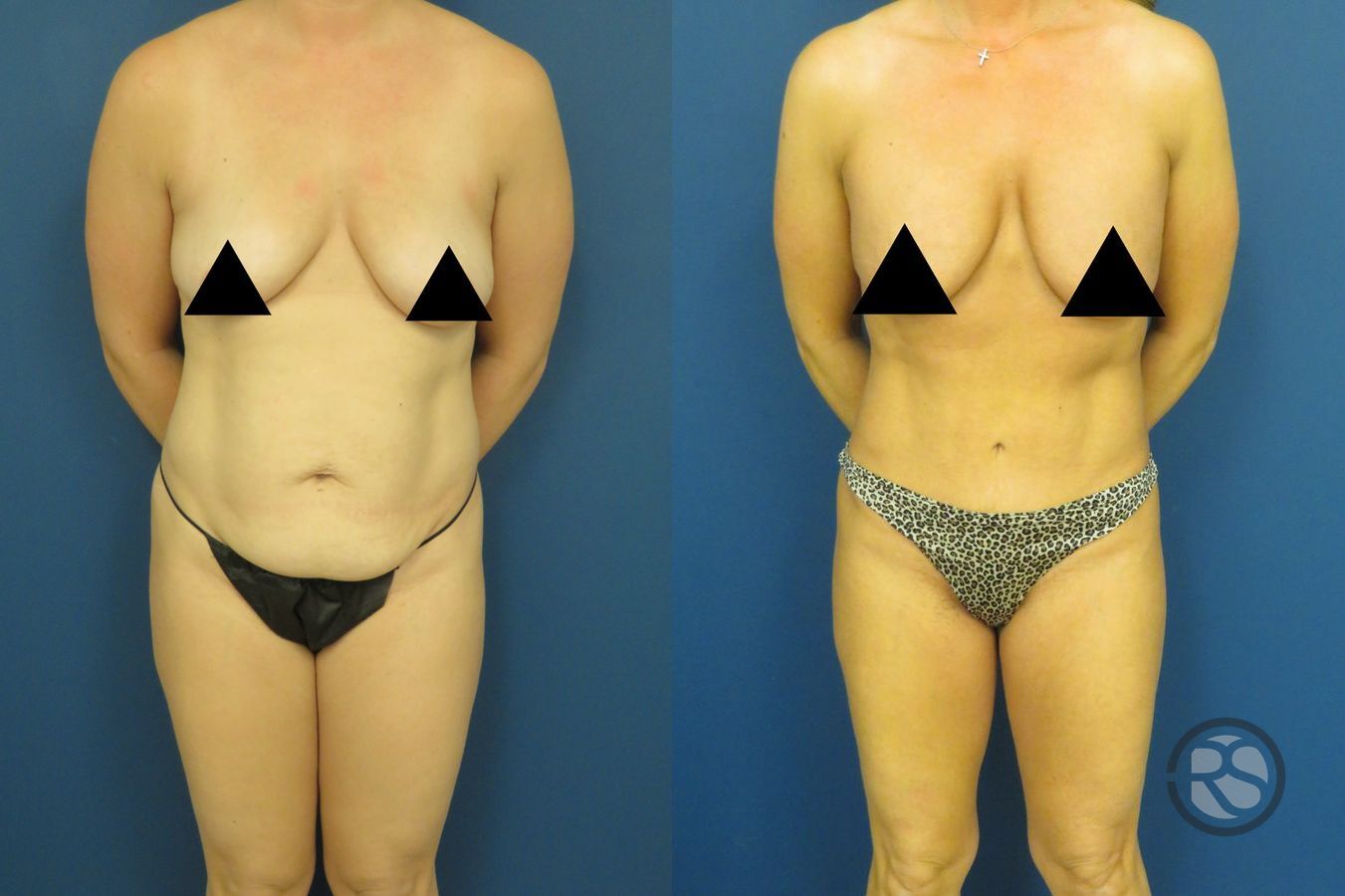
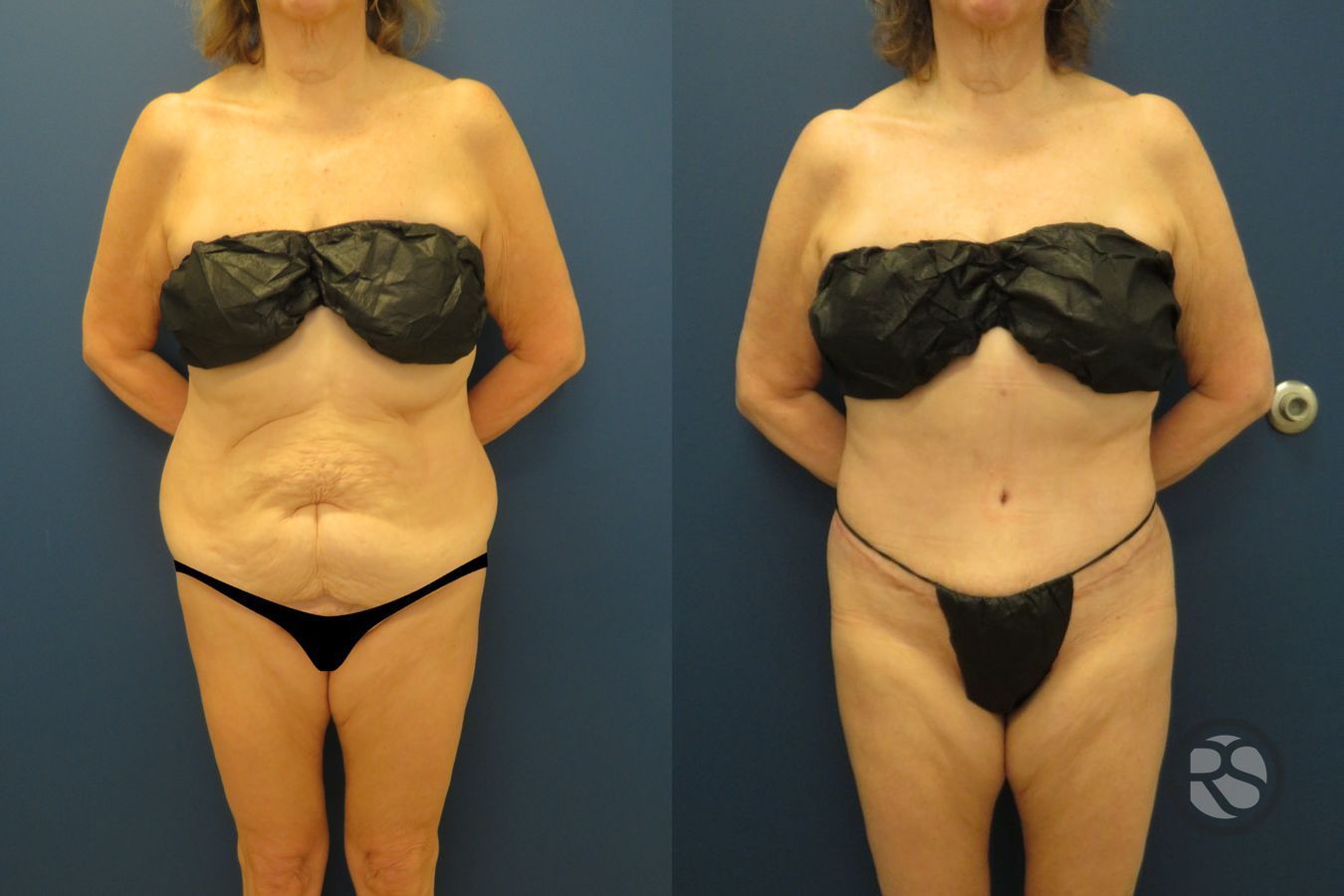
Case #43475
Tummy Tuck (Abdominoplasty)
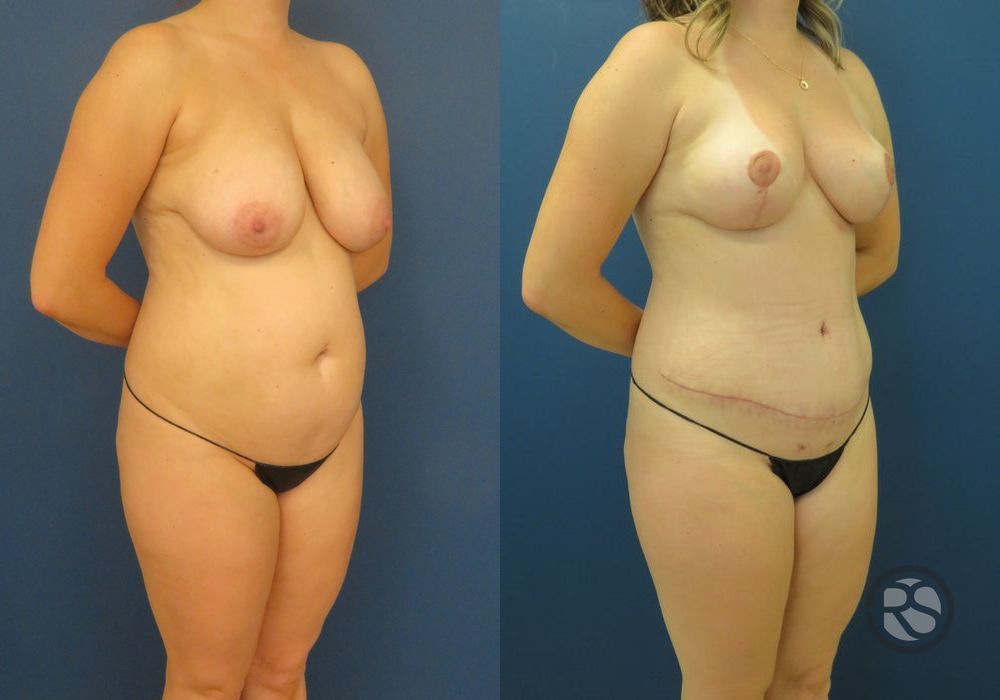
Case #18417
Tummy Tuck (Abdominoplasty)
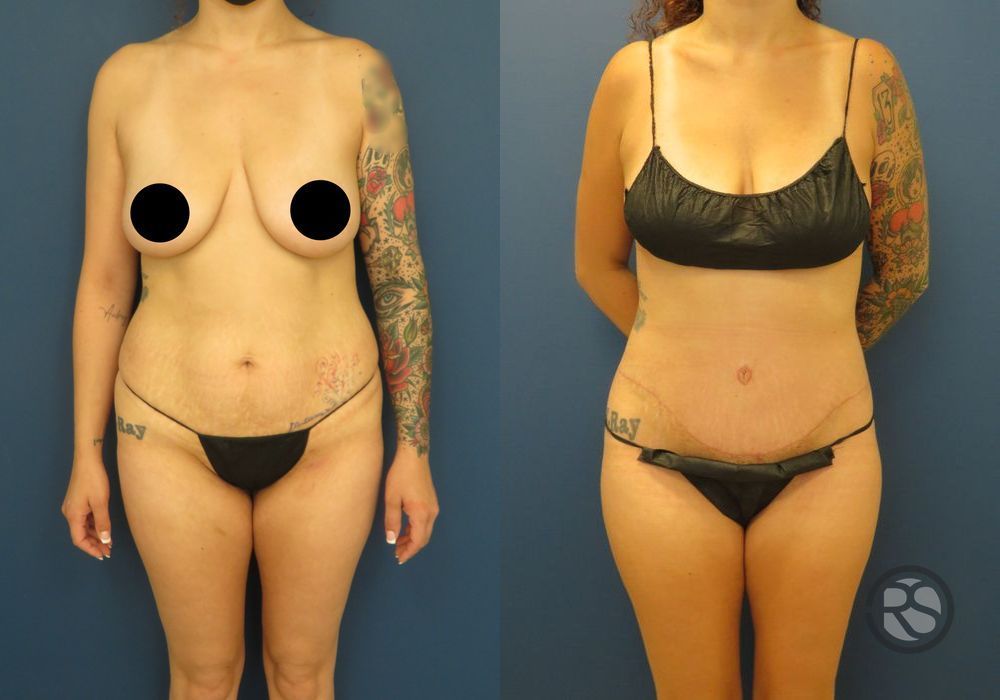
Case #13579
Tummy Tuck (Abdominoplasty)
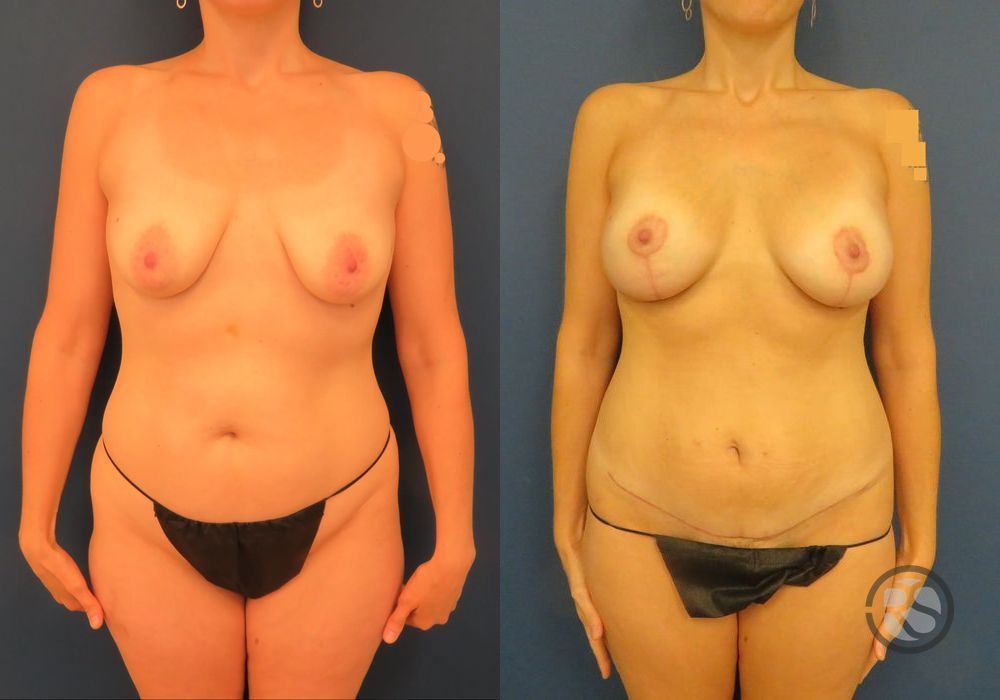
Case #17167
Tummy Tuck (Abdominoplasty)
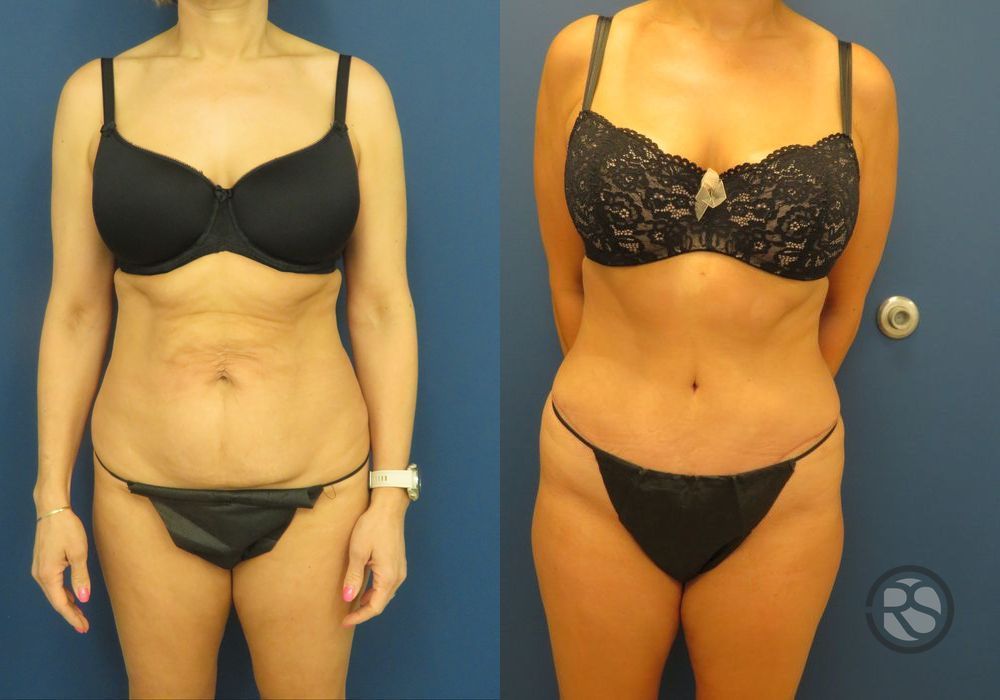
Case #19708
Tummy Tuck (Abdominoplasty)
Are There Different Kinds of Tummy Tucks and What Are They?
There is no single standardized tummy tuck. The operation is selected according to where excess skin is located, how much skin needs to be removed, the condition of the abdominal wall, existing scars, and how far tissue laxity extends around the torso.
Full Tummy Tuck
A full, standard, or traditional abdominoplasty treats loose skin across both the upper and lower abdomen.
The operation typically involves:
- A low horizontal abdominal incision
- Removal of excess abdominal skin
- An incision around the belly button
- Repair of abdominal wall laxity or diastasis when indicated
- Liposuction when appropriate for additional contouring
A full tummy tuck is generally considered when the concern extends both above and below the belly button rather than being limited to a small amount of lower-abdominal skin.
Mini Tummy Tuck
A mini abdominoplasty treats a more limited area below the belly button.
The incision may be shorter than that used for a full tummy tuck, and an incision around the belly button is generally not required. A limited amount of lower-abdominal skin is removed, and lower abdominal wall tightening may be performed when appropriate.
Despite the name, a mini tummy tuck is not simply a smaller version of a full operation for anyone seeking less recovery or a shorter scar. It works well only when the anatomy that needs correction is concentrated below the belly button. If substantial loose skin or abdominal wall laxity extends into the upper abdomen, a mini procedure may leave the primary concern untreated.
Extended Tummy Tuck
An extended abdominoplasty uses a longer horizontal incision to treat excess skin that extends beyond the front of the abdomen toward the hips or flanks.
This approach may be considered after significant weight loss or when lateral skin excess would remain after a standard abdominoplasty. This remaining skin excess is often called a dog-ear. The longer scar is a deliberate trade-off that allows treatment of a wider area.
Fleur-de-Lis Tummy Tuck
A fleur-de-lis abdominoplasty may be considered when substantial skin excess is present in both the vertical and horizontal directions, most commonly after major weight loss. It is also considered when there is already a vertical scar on the abdomen from a prior surgery, and there is a wish to revise that scar.
In addition to the lower horizontal incision, the operation requires a vertical incision along the central abdomen. Removing tissue in two directions can address skin excess that a horizontal incision alone cannot adequately treat, but it creates a more visible scar.
Tummy Tuck With Liposuction
Liposuction is frequently incorporated into abdominoplasty but does not make it a separate type of tummy tuck.
Panniculectomy Versus Tummy Tuck
A panniculectomy and a tummy tuck are related but different operations.
A panniculectomy only removes an overhanging apron of lower abdominal skin and tissue, called a pannus. It may be performed for functional problems such as chronic skin irritation, hygiene difficulty, or interference with activity. A panniculectomy does not place the umbilicus in a new location, repair abdominal muscles (rectus diastasis), or address subcutaneous fat deposits that can be sculpted with liposuction.
The procedures sometimes overlap, particularly after significant weight loss, but they should not be treated as interchangeable terms.
Are You a Good Candidate for a Tummy Tuck?
Candidates for a tummy tuck in the Boston area are generally in good overall health, at a stable weight, and have loose or excess abdominal skin that has not responded to diet or exercise. These changes may develop after pregnancy, significant weight loss, or with aging and reduced skin elasticity. Because abdominoplasty can involve tightening the abdominal wall as well as removing excess skin, women who have completed childbearing may be advised to consider timing the procedure after pregnancy, since a future pregnancy can alter the surgical result.
During your consultation, Dr. Sadowski will evaluate your abdominal wall, skin quality, medical history, overall health, and goals to determine whether abdominoplasty is appropriate for you. Your lifestyle and recovery considerations, including smoking status and proximity to a stable weight, will also be discussed. Schedule your consultation for a tummy tuck in our Chestnut Hill office, located 5 miles outside of Boston, to learn more about your specific options for treatment.
What Other Procedures Can Be Combined With a Tummy Tuck?
Abdominoplasty is often performed as one component of a broader treatment plan. Procedures that may be combined with a tummy tuck include:
- Liposuction
- Breast lift
- Breast augmentation
- Breast reduction
- Labiaplasty
- Arm lift
- Thigh lift
- Other body-contouring procedures
- Selected hernia repair when appropriately coordinated with other surgical care
A Mommy Makeover is not a standardized operation. It describes an individualized combination of procedures used to address changes that may follow pregnancy and childbirth. A treatment plan might include tummy tuck surgery, breast surgery, liposuction, labiaplasty, or another procedure depending on the patient’s anatomy and priorities.
Combining procedures can avoid separate anesthetics and recovery periods, but more surgery is not automatically better. Dr. Sadowski will also discuss risks of increased operative time, risks of combined surgeries, and the amount of recovery you can realistically support. For some patients, staging procedures at separate operations is the more appropriate plan.
Your Consultation with Dr. Sadowski
Your first tummy tuck consultation will take place at our Chestnut Hill office, near Boston, and involves a detailed discussion of your goals, a physical examination of your abdomen, and an explanation of which approach may be appropriate for your anatomy. Depending on your individual concerns, this may include a full, extended, or mini-abdominoplasty. Dr. Sadowski will also review your medical history and discuss whether combining your procedure with liposuction may be appropriate.
You will also discuss incision placement, expected scarring, recovery, potential risks and limitations, and alternatives to surgery. The goal of the consultation is to determine together whether abdominoplasty is appropriate for you and, if so, which approach best fits your anatomy, health, and goals.
What To Expect After Surgery?
Most patients are able to have their abdominoplasty as an outpatient. Dr. Sadowski encourages all of her patients to walk after surgery. In the first 4 weeks, you will slowly increase activity. You will need to wear a compression garment, like a girdle, for about 6 weeks and may need additional dressings, such as body foam, to help your body heal.
Final results can take up to 12 months, but are long-lasting.
What to Expect During Recovery
Recovery from abdominoplasty typically involves an initial period of rest. Depending on the physical demands of your job, you may need to take one to two weeks off work. Walking is encouraged soon after surgery to support circulation, while you should avoid strenuous activity and heavy lifting during the initial healing period.
In addition to wearing a compression garment, you may find that sleeping in a slightly reclined position reduces tension on the incision during the early stages of recovery. Swelling gradually subsides over the following months. Most patients gradually return to their normal activities, including light exercise, within four to six weeks, although your recovery timeline will depend on the extent of your procedure and how your body heals.
Scheduled follow-up appointments at our Boston area office allow Dr. Sadowski to monitor your healing and assess your incision and abdominal wall as you recover from your tummy tuck.
Schedule Your Tummy Tuck Consultation in the Boston/Chestnut Hill Area
If you are considering abdominoplasty, a consultation with Dr. Sadowski can help you understand whether the procedure is appropriate for your anatomy and goals. Together, you can discuss the potential benefits and limitations of surgery, the available approaches, expected recovery, risks, and alternatives.
Contact our Chestnut Hill office to schedule a consultation and discuss whether a tummy tuck in Boston is right for you.