Case #19212
Breast Implant Removal.
There are many reasons that a woman may choose to undergo Breast Implant Removal. Although implants are long-lasting, they are not lifetime devices.
. Implant deflation, rupture, malposition, or capsular contracture (thickened scar tissue) can all lead a person to choose to remove an implant. Sometimes the body has changed and the implant no longer is cosmetically appealing, or the person simply does not want them anymore.
Regardless of the reason, explantation is possible. Explantation is not a single standardized operation. Surgical planning depends many factors such as:
- The type of implant
- Age of the implant
- Whether the implant is intact or ruptured
- Whether the capsule (scar tissue layer) is thickened or contracted
- The condition of the surrounding breast tissue and skin
- Whether additional reshaping (such as a breast lift) is needed to support breast contour after removal.
Dr. Sadowski approaches explantation in a tailored approach that incorporates your medical needs and aesthetic desires.
Why Choose Dr. Sadowski?
Dr. Sadowski is a double board-certified plastic and reconstructive surgeon and a member of the American Society of Plastic Surgeons. She has built an award-winning practice on surgeries that are transformative to patients, such as breast explantation. Her practice emphasizes individualized anatomy-based planning, careful surgical execution, and long-term patient care.
Breast implant removal can range from straightforward to complex depending on the capsule, implant position, prior surgeries, and tissue quality. Dr. Sadowski’s planning process focuses on anatomy-based decision-making, risk awareness, and tailoring the surgical approach to the patient’s priorities (for example, removal alone versus removal with reshaping).
Breast Implant Removal before & after gallery
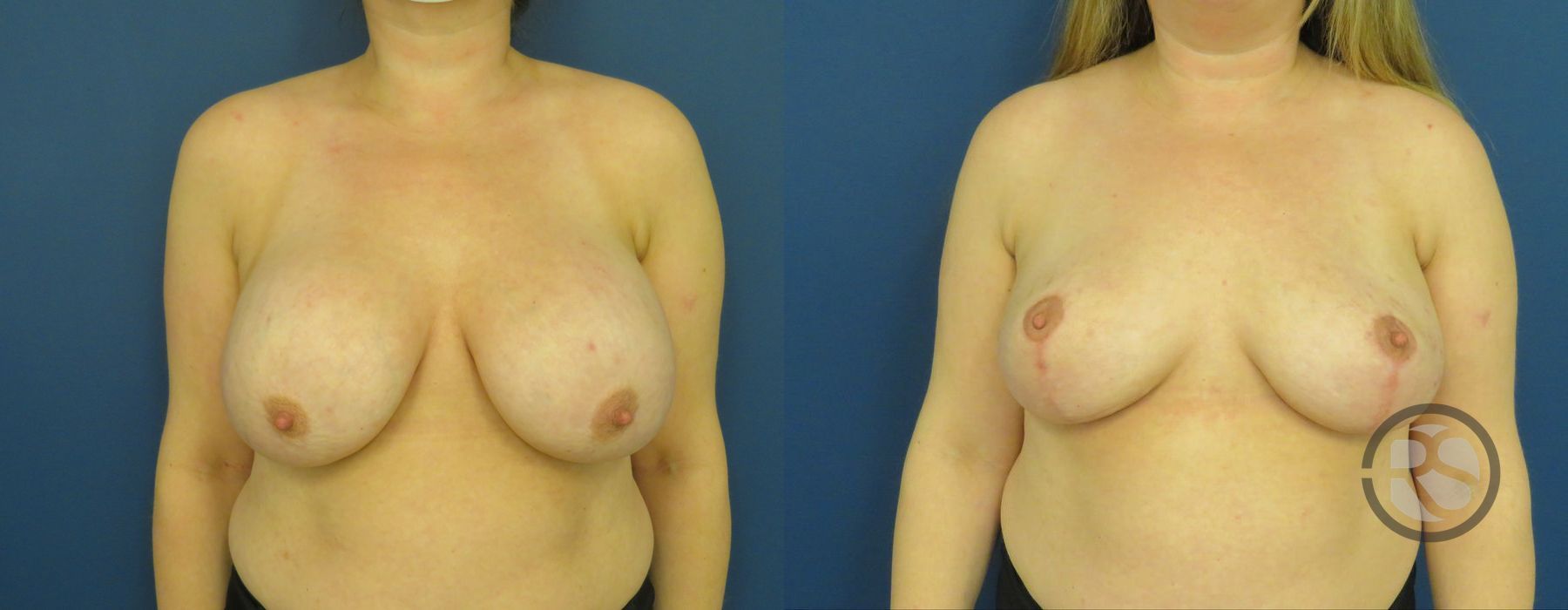
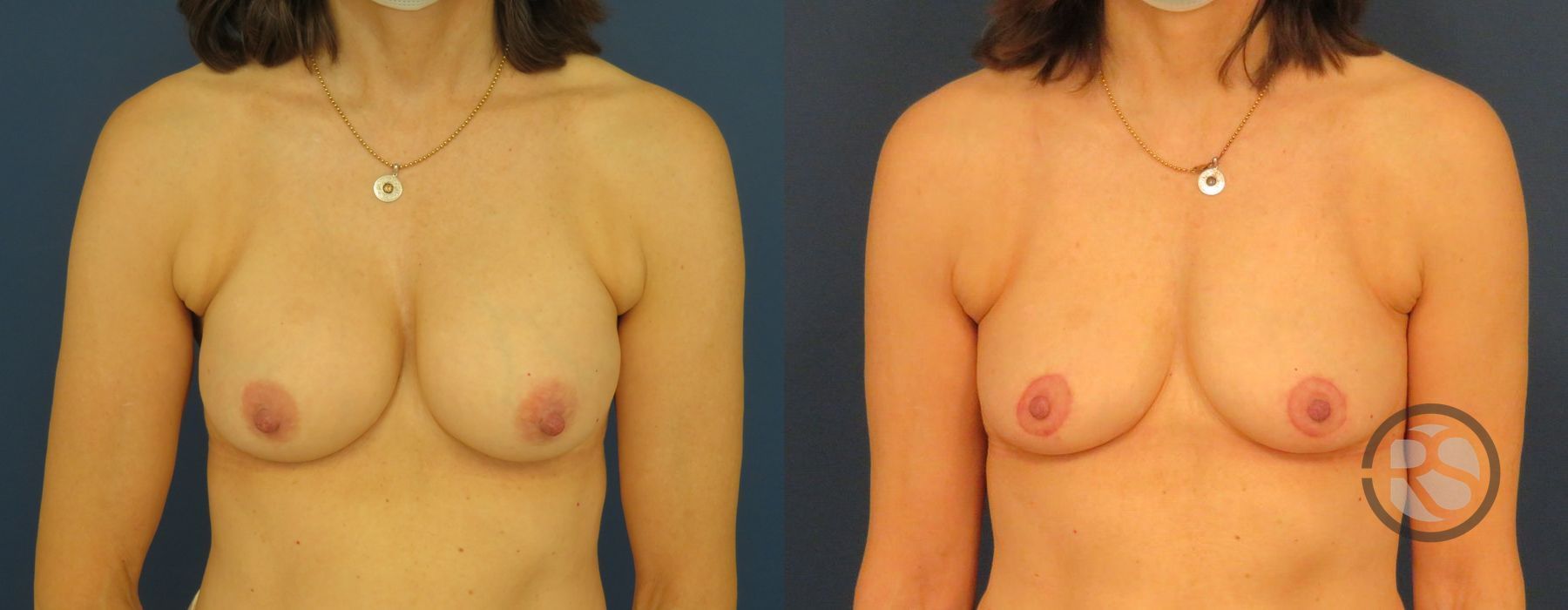
Case #19924
Breast implant removal (explantation)
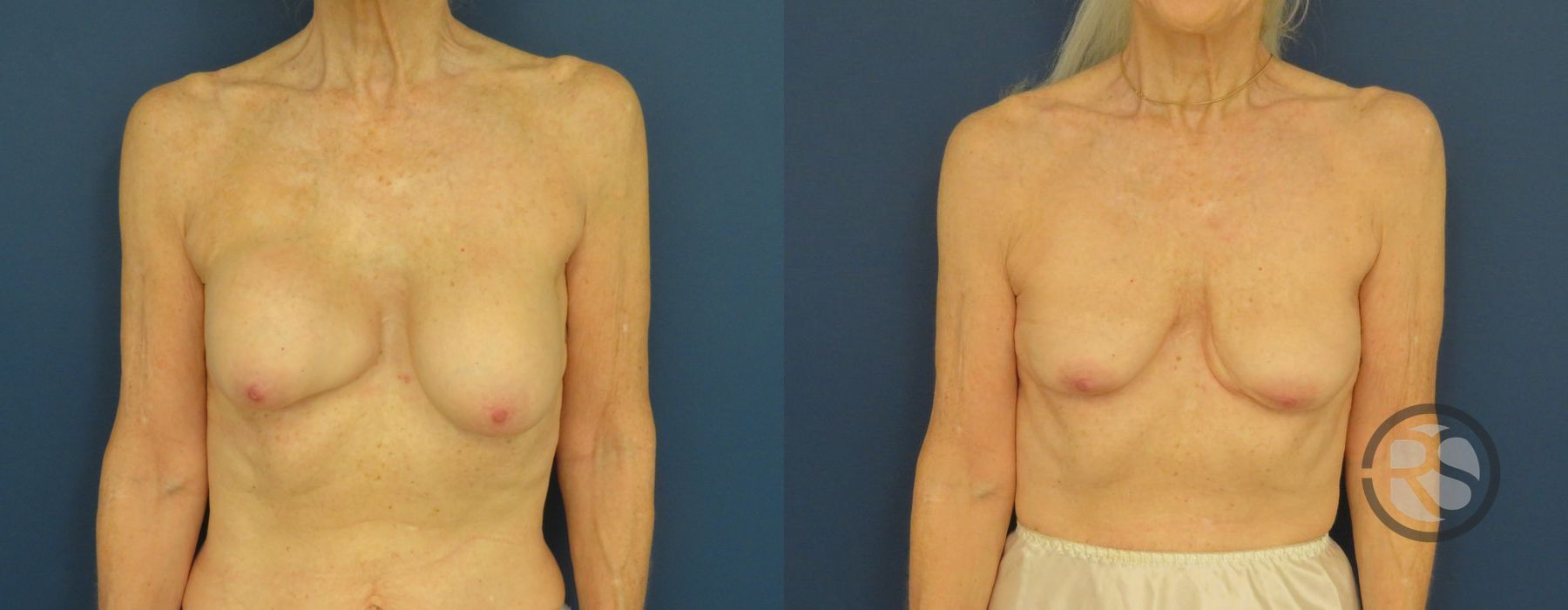
Case #17610
Breast implant removal (explantation)
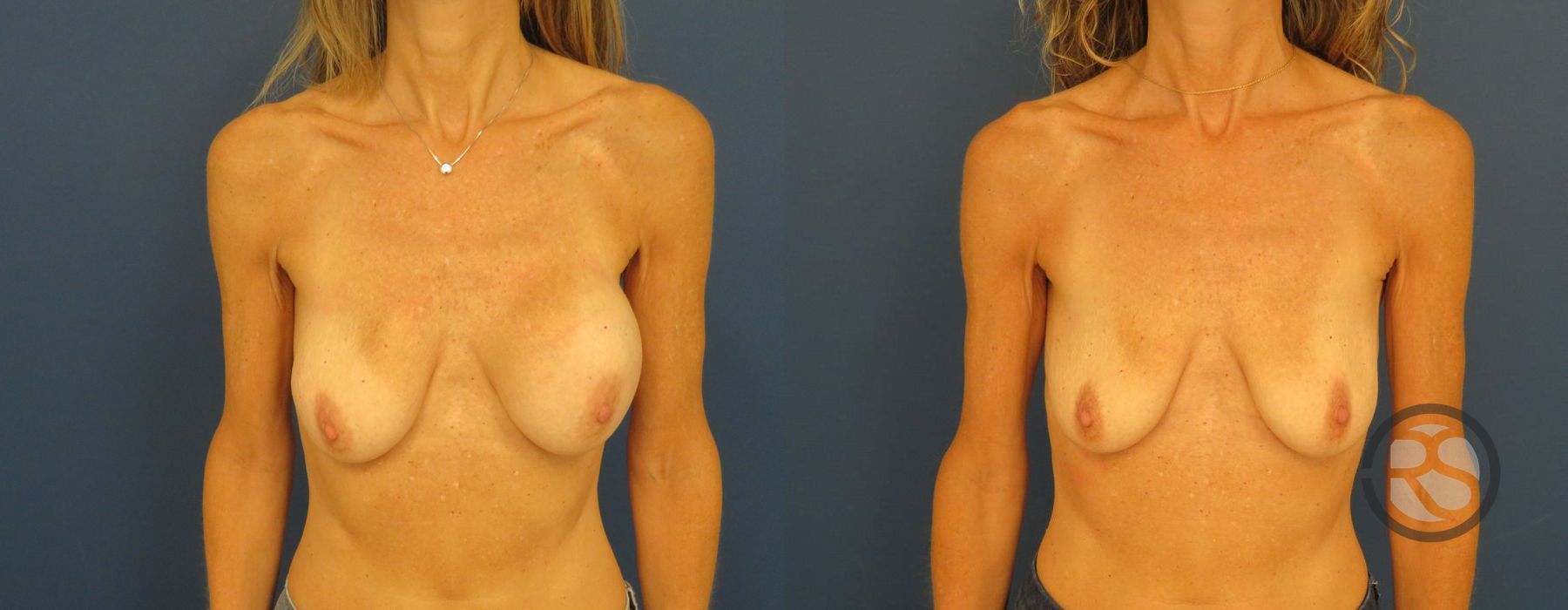
Case #18382
Breast implant removal (explantation)
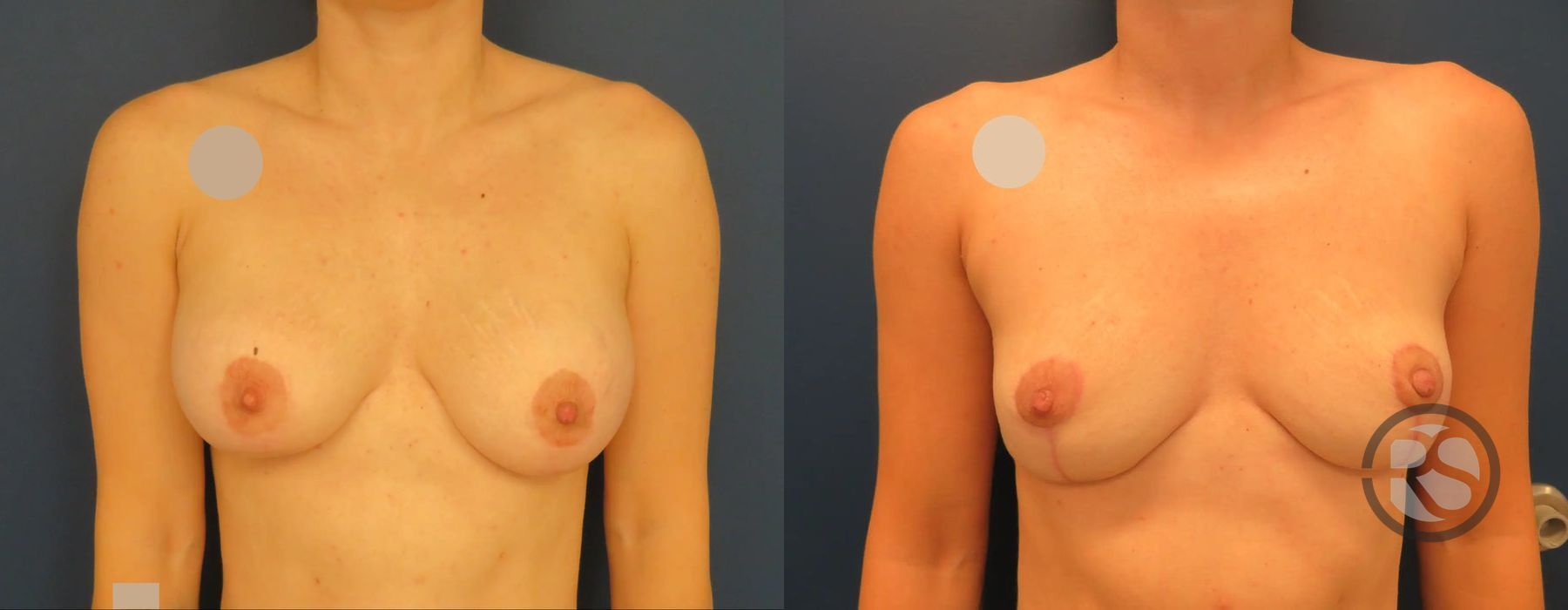
Case #18406
Breast implant removal (explantation)
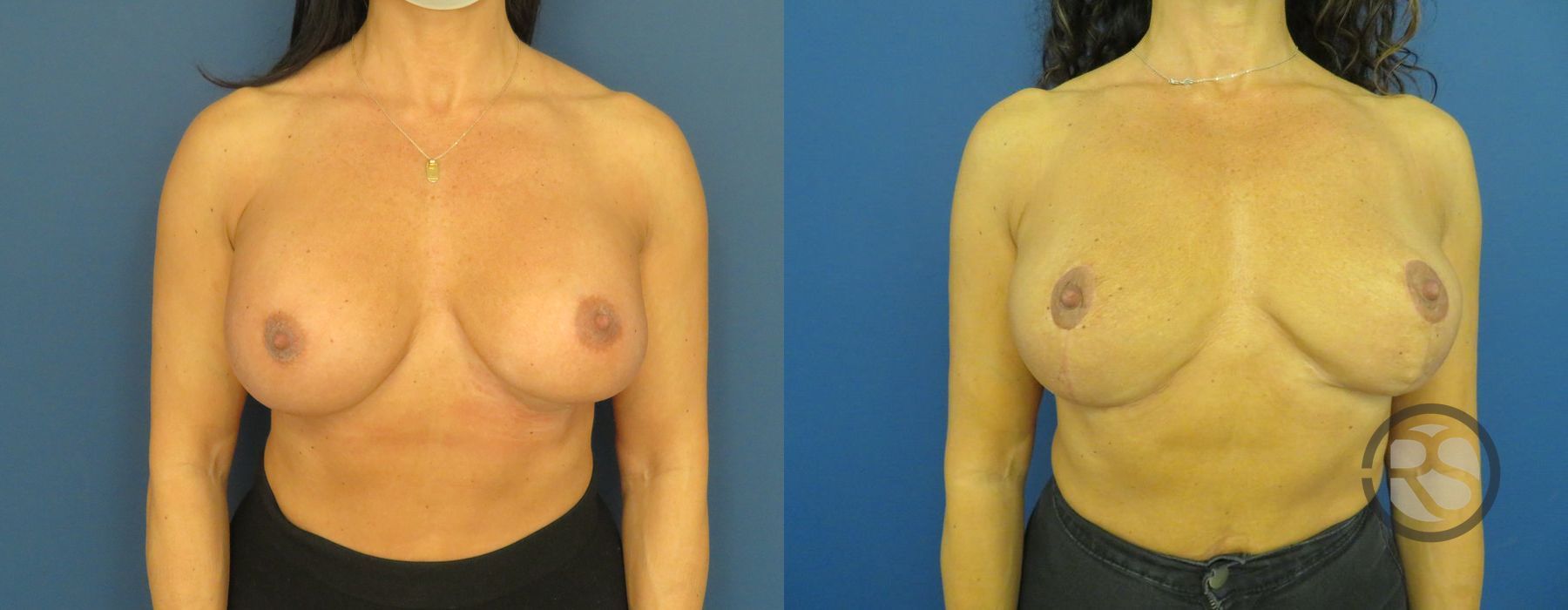
Case #18893
Breast implant removal (explantation)
What is Breast Implant Removal (Explantation)?
Breast implant removal is an operation that removes a breast implant from its pocket. Depending on the clinical situation and surgical goals, explantation may include one or more of the following components:
- Removal of the implant
- Evaluation and/or removal of some or all of the capsule (the scar tissue layer that forms around an implant)
- Removal of free silicone (if a silicone implant has ruptured)
- Pocket adjustment to help the breast settle in a stable position after implant removal
- Reshaping procedures (such as a breast lift) when needed to address excess skin or breast droop
Explantation does not automatically restore the breast to its pre-implant shape. After implant removal, breast appearance depends on baseline anatomy, implant size, skin elasticity, and how long the implants were present. During consultation, planning typically includes discussion of expected contour changes and whether reshaping may be helpful.
Are there different kinds of Breast Implant Removal procedures and what are they?
Yes. “Explantation” is an umbrella term. The best approach depends on the reason for removal, implant type, capsule characteristics, and patient goals.
Implant removal only
In some cases, implant removal alone is appropriate—particularly when the capsule is thin, non-problematic, and removal of the implant alone does not create a safety concern. This approach may involve less dissection and can be appropriate for selected patients.
Capsulectomy options (partial, total, and “en bloc” terminology)
A capsule is the scar tissue layer the body forms around an implant. When the capsule is thickened, painful, contracted (capsular contracture), calcified, or contains suspicious fluid or masses, more extensive capsule management may be recommended.
Common approaches include:
- Partial or “Precise” capsulectomy: Removal of part of the capsule when only a portion is problematic or when complete removal would increase surgical risk.
- Total capsulectomy: Removal of most or all of the capsule when clinically indicated.
- “En bloc” capsulectomy: A term often used to describe removing the implant and capsule together as a single unit. In medical practice, true en bloc removal is typically reserved for specific indications (for example, malignancy-related concerns) and may not be necessary—or safest—for many patients.
The choice of capsule management is individualized. Dr. Sadowski will explain what is feasible, what is medically indicated, and what tradeoffs exist for each approach.
Removal for implant rupture
Rupture management depends on whether the implant is saline or silicone.
- Saline implant rupture is usually obvious because the breast deflates as the saline is absorbed by the body.
- Silicone implant rupture may be “silent” (not obvious on exam) and may be detected on imaging. When silicone rupture is present, surgical planning may include removal of the implant and management of silicone within the capsule or surrounding tissues.
Removal for capsular contracture
Capsular contracture is tightening and thickening of the capsule that can cause firmness, distortion, or pain. Surgical management may include implant removal with partial or total capsulectomy, with or without replacement or reshaping, depending on goals.
Removal with reshaping (explant + lift, or volume adjustment)
Many patients seek explantation along with breast reshaping to address excess skin, nipple position, or loss of upper pole volume after implant removal. Options may include:
- Explantation with mastopexy (breast lift): to improve breast position and reduce excess skin
- Explantation with fat transfer (selected patients): for modest volume or contour refinement
- Explantation with implant exchange (replacement): for patients who want continued implant-based volume but with a different size or type
Am I a candidate for Breast Implant Removal (Explantation)?
Patients consider explantation for many reasons. You may be a candidate if you:
- Have a breast implant and desire removal for personal, medical, or maintenance-related reasons
- Have implant-related findings such as rupture, malposition, or capsular contracture
- Have chronic discomfort, tightness, or breast distortion related to the implant or capsule
- Are in good overall health and able to undergo anesthesia and postoperative healing
- Understand that breast shape may change after implant removal and that additional reshaping may be needed to meet contour goals
You may need additional preparation or medical evaluation first if you:
- Use nicotine (smoking/vaping), which significantly increases wound-healing risk
- Have uncontrolled medical conditions (for example, poorly controlled diabetes)
- Have new breast lumps, skin changes, swelling, or persistent fluid around an implant that require diagnostic workup
- Are pregnant or breastfeeding, or recently breastfeeding (timing matters)
What are the benefits of Breast Implant Removal (Explantation)?
Patients pursue explantation for different reasons, and benefits depend on the underlying indication and individual goals. Potential benefits may include
If a patient is seeking explantation because of systemic symptoms attributed to implants (sometimes referred to as breast implant illness), it is important to understand that symptoms are real and deserve thoughtful evaluation. There is no single diagnostic test that confirms breast implant illness. Dr. Sadowski will help you to make an informed decision, review alternative explanations when appropriate, and plan surgery with clear expectations and careful follow-up.
Patient Timeline
While timelines vary based on surgical complexity (implant-only versus capsulectomy and/or lift), a typical course includes:
Schedule consultation
Meet with surgeon 45-60 minutes
Preoperative planning and any needed imaging or medical clearance
Schedule surgery
Surgery (duration varies depending on capsule management and whether additional reshaping is performed)
Early recovery over the first 1–2 weeks with activity restrictions
Rest and recovery plan 1-6 weeks.
What is the First Step?
The first step is an in-depth consultation. Dr. Sadowski will review your goals, implant history (type, age, placement), symptoms, and prior surgical records if available. A physical exam helps assess breast tissue, skin quality, implant position, and signs of capsule tightening.
When appropriate, imaging may be recommended to evaluate implant integrity or investigate breast changes. The consultation is designed to clarify options—removal alone versus removal with capsule management and/or reshaping—and to set realistic expectations for postoperative contour.
What to expect on the day of surgery?
You will come to the surgery prepared, with a plan that has been selected by yourself and Dr. Sadowski. Any changes to your medications or regular treatment regimen will have occurred. You will have all of your medications for after surgery. Because this surgery requires general anesthesia, you will need a responsible adult to bring you to and from the surgical facility. In effect, all you will need to do now is show up and let the healing begin.
What is the recovery like?
Recovery depends on the extent of surgery. Implant removal alone may involve a shorter recovery than explantation combined with extensive capsulectomy or a breast lift.
Most patients experience soreness, tightness, and swelling rather than sharp pain. Activity restrictions typically focus on protecting incisions and internal healing, especially when pocket adjustments or reshaping are performed.
Dr. Sadowski’s patients benefit from the use of local nerve blocks, which may last as long as 3 days. She uses multimodal pain-management strategies and will incorporate ERAS principles to support recovery. Your specific plan will be individualized based on what was performed during surgery.
How long do the results last for Breast Implant Removal (Explantation)?
Explantation is intended to be definitive in the sense that the implant is removed. However, breast shape and contour can continue to change over time due to aging, weight fluctuations, pregnancy, and skin elasticity.
If a breast lift or fat transfer is performed, those results also evolve as swelling resolves and tissues settle. Routine breast screening should continue on your regular age-appropriate schedule. If capsule tissue is removed, pathology review may be performed based on clinical findings and surgical judgment.
What other procedures can be combined with Breast Implant Removal (Explantation)?
Explantation is frequently combined with procedures that address contour after implant removal, such as:
- Breast lift (mastopexy) to address skin excess and nipple position
- Fat transfer in selected patients for modest volume and contour refinement
- Implant exchange (replacement) for patients who want continued implant-based volume
- Scar revision when prior scars are problematic
- Body contouring procedures in selected patients when overall operative time and recovery are appropriate
What other options are there if I’m not ready for surgery?
Perhaps you are considering removing your implants, but are not ready to commit to it yet. There are still proactive things that you can do such as:
- Observation with routine follow-up for stable implants without concerning findings
- Imaging surveillance for silicone implant integrity when recommended
- Supportive bras and garment strategies for comfort
- Medical management of capsular contracture
- Evaluation of systemic symptoms with your primary clinician or specialists to assess other potential causes, especially if concern exists for breast implant illness
During your consultation with Dr. Sadowski, she will help to clarify what is medically urgent versus elective and help work with you to identify timing that fits your health and life circumstances.